The electrical systems that power our residential and commercial infrastructure rely entirely on the precise selection of conductors and protective jackets. In the electrical trade, wire choice is never a matter of preference; it is a critical engineering decision governed by the unyielding laws of physics and the strict legal mandates of the National Electrical Code (NEC). Every conductor has specific thermal, physical, and environmental limitations. If an improperly rated wire is installed in a wet location or subjected to physical damage, the insulation will degrade, leading to ground faults, arc flashes, and structural fires. In states like New Jersey, where strict safety regulations are enforced to prevent these hazards, learning the technical foundation is a core requirement of an accredited Electrician Training Program in NJ. This environment ensures students build the expertise needed to navigate the NEC and maintain compliance on the job site."
From Metal-Clad (MC) Cable to Non-Metallic Sheathed Cable (NM-B) to THHN, each wiring method is engineered for specific environments. Whether navigating the high ambient temperatures of a commercial drop ceiling or the corrosive potential of a damp basement, licensed professionals must understand the chemical and physical properties of these materials. This guide details the exact specifications, legal applications, and physical installation methods for the three most common wiring types in the industry.
Key Takeaways
NM-B (Romex): The standard non-metallic sheathed cable used exclusively for indoor, dry, residential applications.
THHN/THWN: Thermoplastic High Heat-resistant Nylon-coated single conductors, typically pulled through metal or PVC raceways; THWN variants are rated for wet locations.
MC Cable: Metal-Clad cable featuring a flexible, spiraled aluminum or steel armor, used heavily in commercial settings to provide built-in physical protection.
Conduit Fill: The strict NEC calculation that limits the number of individual THHN wires allowed inside a pipe to prevent thermal overload.
Wet Locations: Areas defined by the NEC that are subject to saturation with water or other liquids, strictly prohibiting the use of NM-B cable.
American Wire Gauge (AWG): The standard system used to denote the diameter of the copper or aluminum conductors inside the cable assembly.
Romex (NM-B Cable): The Residential Standard
"Romex" is a heavily generalized, trademarked brand name for Non-Metallic Sheathed Cable, officially designated by the NEC as Type NM-B. The "non-metallic" classification refers to the polyvinyl chloride (PVC) outer jacket that bundles the inner conductors together.
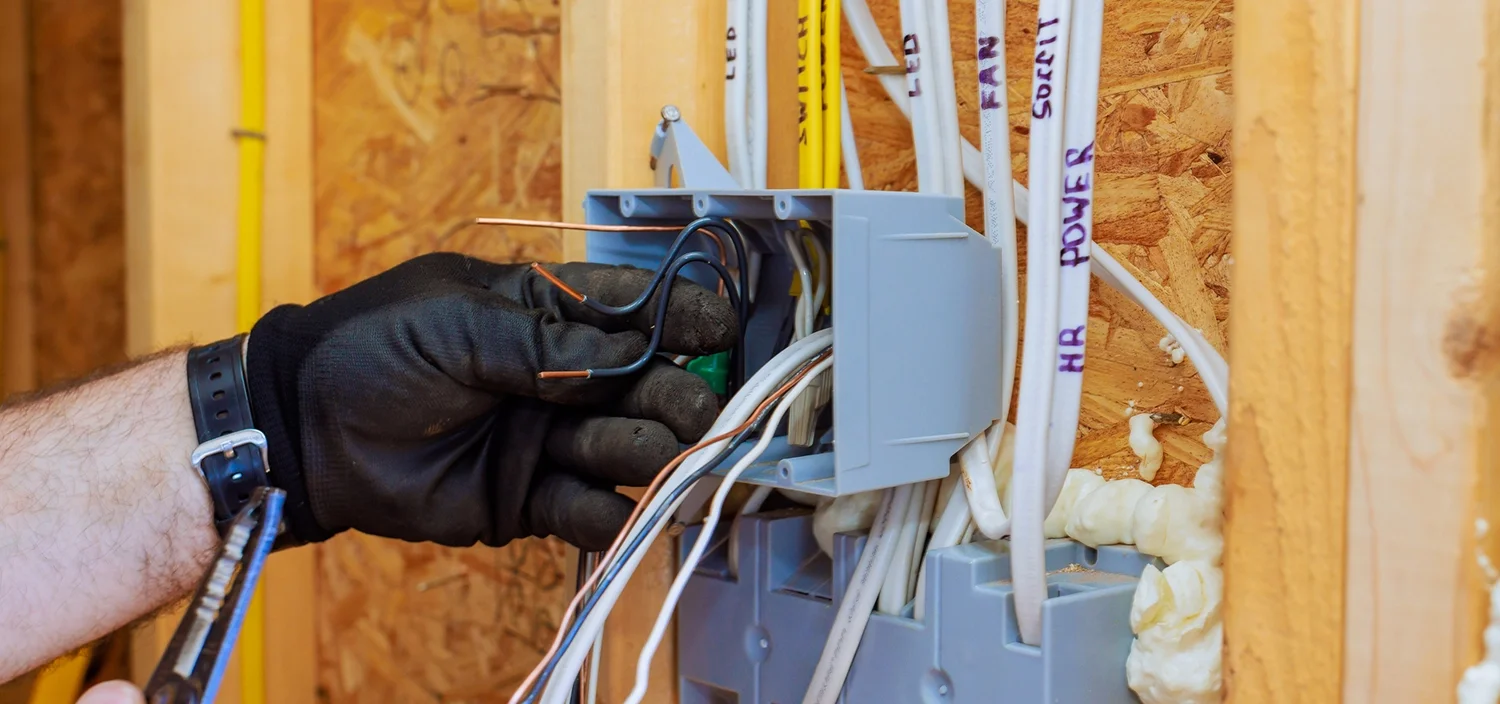
A standard NM-B assembly contains an insulated hot wire (typically black), an insulated neutral wire (typically white), and a bare copper equipment grounding conductor (EGC). NM-B cable is sold in bundles of two, three, or four current-carrying conductors. The sizing is designated using the American Wire Gauge (AWG) system followed by the conductor count. For example, a cable labeled "14/2" contains two 14-gauge insulated wires plus a ground, while "12/3" contains three 12-gauge wires (black, red, white) plus a ground.
NM-B is the undisputed standard for modern residential wiring. It is cost-effective, flexible, and highly efficient for routing through wood-framed construction. It is legally permitted in concealed and exposed spaces, provided those spaces remain strictly dry.
The installation of NM-B is heavily regulated. The NEC dictates that holes drilled into wooden studs must be centered. If the hole is closer than 1.25 inches to the face of the stud, the electrician must install a steel nail plate to prevent drywall screws from puncturing the jacket. Furthermore, the cable must be secured with approved staples every 4.5 feet and within 12 inches of every junction box.
Crucially, there are strict limitations on NM-B usage. It cannot be used outdoors, embedded in masonry, or installed in wet or damp spaces. This includes covered outdoor patios and underground PVC conduits. If moisture breaches the paper wrapping inside the PVC jacket, it will cause the bare copper ground to corrode and compromise the insulation of the hot conductors.
THHN/THWN Wire: The Commercial Workhorse
THHN (Thermoplastic High Heat-resistant Nylon-coated) is distinctly different from NM-B. Instead of a bundled cable assembly, THHN is a single, individual conductor. It features a PVC insulation layer covered by a tough, clear nylon jacket that resists abrasion, oil, and gasoline. When manufactured with a dual-rating of THWN (Water-resistant), the conductor is legally permitted for use in wet locations, making it an incredibly versatile material.
THHN/THWN is the primary choice for commercial, industrial, and heavy-duty residential applications. It is the standard wire used for branch circuits, feeder lines, and motor control centers.
Unlike NM-B or MC cable, THHN cannot be installed bare inside a wall cavity. It must be manually pulled through a protective raceway system, such as Electrical Metallic Tubing (EMT), Rigid Metal Conduit (RMC), or Polyvinyl Chloride (PVC) pipe. This provides maximum physical protection and allows electricians to upgrade circuits easily by pulling new wires through the existing pipe system.
Installing THHN requires specialized skills and tools, such as fish tape and pulling lubricants. Professionals must also calculate exact conduit fill ratios. The NEC strictly prohibits filling a conduit to 100% capacity. Overpacking a pipe prevents heat dissipation, causing the nylon jackets to melt together and create a massive short circuit. Since NJ inspectors check these pipe-fill rules before they'll let you turn the power on, learning how to get these measurements right is a big part of the training at a top-rated Electrician School in New Jersey.
MC Cable (Metal-Clad): The Armored Solution
Metal-Clad (MC) Cable bridges the gap between the flexibility of NM-B and the physical protection of conduit. MC cable consists of a bundle of insulated THHN conductors encased inside a spiraled, interlocking aluminum or steel armor.
Standard MC cable contains the hot and neutral conductors alongside a dedicated, insulated green ground wire. The flexible metal armor provides tremendous protection against physical damage, rodent chewing, and nail punctures. This built-in durability makes MC cable the standard wiring method for metal-framed commercial buildings, industrial drop ceilings, and areas where rigid conduit is too difficult or expensive to route.
While MC cable has a higher upfront material cost than NM-B, it drastically reduces labor time in commercial environments. Electricians can route MC cable rapidly through complex structural framing without the laborious process of measuring, cutting, and bending rigid EMT piping.
Terminating MC cable requires precise mechanical skills. Electricians must use specialized rotary cutters (often referred to as "Roto-Splits") to snap the interlocking armor without nicking the THHN insulation inside. They must also install anti-short bushings (commonly called "red devils") at the cut edge of the armor to protect the wires from the sharp metal burrs before securing the cable into a junction box with an approved MC connector.
Wiring Types Compared
| Cable/Wire Type | Primary Environment | Requires Conduit? | Best Use Case |
|---|---|---|---|
| NM-B (Romex) | Indoor, Dry Locations Only | No | Wood-framed residential housing |
| THHN/THWN | Indoor, Outdoor, Wet Locations | Yes (Always) | Commercial conduit systems, underground PVC |
| MC Cable | Indoor, Dry Commercial Spaces | No (Self-Armored) | Metal-framed commercial buildings, drop ceilings |
Material Cost and Labor Analysis
Selecting the correct wiring method is a balance of code compliance, physical protection, and project budgeting.
For residential applications, NM-B is the most cost-effective solution. The material itself is inexpensive, and the labor required to drill studs and staple the soft cable is minimal, keeping overall construction costs low.
THHN wire requires the highest labor investment. While the individual spools of wire are affordable, the electrician must first build the entire raceway system. Bending EMT requires precise mathematics to navigate corners and structural obstacles. Once the pipe is built, the labor continues with the physical pulling of the wire.
MC cable sits in the middle of the financial spectrum. The manufactured armored cable is more expensive per foot than NM-B or THHN, but the labor savings are immense. By eliminating the need to bend and install separate conduit, electricians can wire a commercial space in a fraction of the time, often making MC cable the most economical choice for commercial build-outs.
Common Beginner Mistakes with Wiring Selection
Electricity is unforgiving. A single incorrect wiring choice can lead to immediate equipment failure or delayed, catastrophic hazards. Aspiring professionals must prioritize formal instruction to avoid these common code violations.
Routing NM-B Underground: Installing NM-B inside an underground PVC conduit is a severe NEC violation. Even though the pipe is watertight, the earth's temperature causes internal condensation. The paper backing inside NM-B will absorb this moisture, leading to insulation failure and short circuits. THWN must be used in these environments.
Ignoring Physical Protection: NM-B cannot be exposed to physical damage. Running unprotected Romex down the face of a concrete garage wall is illegal. Electricians must transition to MC cable or sleeve the NM-B inside rigid conduit to protect it from impact.
Overfilling Conduit: Stuffing too many THHN conductors into a raceway violates the NEC conduit fill charts. This prevents thermal dissipation and makes pulling the wire physically impossible without tearing the nylon jackets.
Violating Color Codes: The NEC mandates specific color identification for conductors. Un-grounded "hot" wires are typically black, red, or blue. Grounded "neutral" wires must be white or gray. Equipment grounding wires must be green or bare copper. Mixing these up creates lethal shock hazards for future technicians troubleshooting the system.
To stay current on these evolving safety standards and complex code revisions, working professionals often rely on targeted Electrician classes & bootcamps throughout their careers.
Starting a Career in the Electrical Trade
Choosing the correct wire type is just the beginning if you want to start a career in the electrical trade. To safely navigate the complexities of the NEC and power the infrastructure around us, you need comprehensive technical education. The Training Center is a state-approved Electrician School in New Jersey that equips students with the hands-on expertise to safely install residential wiring systems, bend commercial conduit, and navigate strict electrical codes. Understanding exactly when to use Romex, THHN, or MC Cable is a critical field skill for any apprentice working to become a recognized journeyman. Explore our training programs to build your practical skills, pass your state exams, and secure a high-demand future in the industry.