Becoming an electrician is one of the most stable and high-demand career paths in the skilled trades. Modern infrastructure relies entirely on consistent power generation, and the need for qualified, highly skilled tradespeople shows no signs of slowing down. This is particularly true in areas like New Jersey, where both residential and commercial development are expanding rapidly. To meet this local demand, the state offers a highly structured and standardized licensing process. Navigating this legal framework and applying the National Electrical Code (NEC) is the primary focus of a quality Electrician Training Program in New Jersey, where students acquire the technical knowledge required to start an electrical career and excel on the job site.
Key Takeaways
Voltage Ratings: Residential electricians work with 120V/240V split-phase systems, while commercial electricians handle 208V, 277V, and 480V three-phase systems.
Wiring Materials: Residential homes use non-metallic sheathed cable (NM-B), whereas commercial sites require wires to be pulled through metal conduit or installed as Metal-Clad (MC) cable.
Safety Protocols: Commercial work involves strict OSHA 30 standards, Lockout/Tagout (LOTO) procedures, and Arc Flash hazard mitigation.
Work Environments: Residential work involves service calls to private homes; commercial work entails long-term projects on active industrial or retail sites.
Blueprints and Schematics: Commercial roles require reading complex one-line diagrams, while residential work focuses on simpler floor plans and wiring diagrams.
The Role of a Residential Electrician
A residential electrician’s work environment consists of private living spaces. The majority of the workload involves making service calls to single-family homes, townhouses, apartment buildings, and condominiums. Since New Jersey jurisdictions require strict adherence to the Uniform Construction Code (UCC) for home renovations, choosing a top Electrician School in New Jersey is essential for learning how to pass local inspections and understand the unique permitting requirements of the state.
The day-to-day duties of a residential electrician typically include:
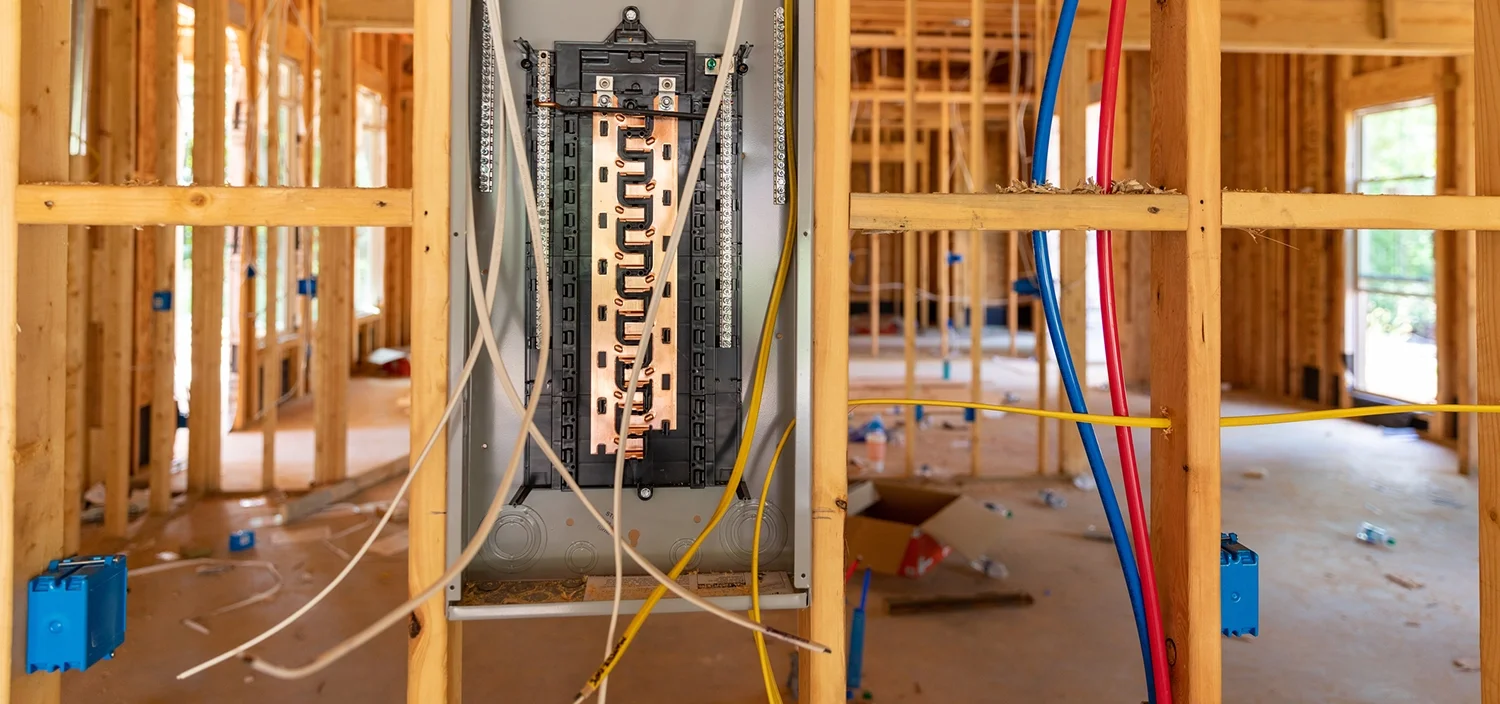
Rough-ins: The installation of the entire electrical framework before the drywall is hung.
Service Upgrades: Replacing outdated 100-amp service panels with modern 200-amp panels to support EV chargers and electric heat pumps.
Rewiring: Removing degraded knob-and-tube or cloth wiring and replacing it with modern, code-compliant conductors.
Troubleshooting: Diagnosing dead receptacles, locating lost neutrals, and replacing faulty circuit breakers.
Residential work demands excellent interpersonal skills. Electricians must enter private, occupied spaces and communicate technical problems clearly to homeowners while protecting their property and maintaining a professional demeanor.
The Role of a Commercial Electrician
Commercial electricians operate in virtually every structure outside of private homes. This encompasses office buildings, hospitals, retail centers, and industrial manufacturing plants. Unlike residential technicians who frequently interact with the general public, commercial electricians typically work on large crews alongside pipefitters and HVAC technicians.
The day-to-day duties of a commercial electrician include:
Conduit Fabrication: Calculating, cutting, and bending rigid Electrical Metallic Tubing (EMT) and Intermediate Metal Conduit (IMC).
Heavy Equipment Installation: Wiring industrial switchgear, buck-boost transformers, and motor control centers (MCCs).
Wire Pulling: Operating mechanical tuggers to pull heavy-gauge feeder cables (often 500kcmil or larger) through long pipe runs.
Preventative Maintenance: Using thermal imaging cameras to locate failing breakers and prevent facility downtime.
Commercial electricians often stay on a single job site for months. Since commercial buildings draw significantly more power, the safety protocols are heavily scrutinized by local inspectors, requiring technicians to regularly complete targeted Electrician classes & courses to stay compliant with updated regulations.
Technical Comparison: Residential vs. Commercial
The following table details the distinct technical specifications required for each sector of the electrical trade.
| Feature | Residential Electrician | Commercial Electrician |
|---|---|---|
| Primary Voltage | 120V / 240V | 120V, 208V, 277V, 480V |
| Power System | Split-Phase (Single-Phase) | Three-Phase |
| Wiring Method | Type NM-B (Romex) | THHN in Conduit / MC Cable |
| Raceway Needs | Minimal (Drilled Wood Studs) | Extensive (EMT, IMC, PVC) |
| Blueprint Type | Architectural Floor Plans | One-Line Diagrams & Schematics |
| Common Phase | 2-Wire + Ground | 3-Wire / 4-Wire + Ground |
The Science: Split-Phase vs. Three-Phase Power
The most significant technical difference between these two career paths is the physical nature of the electricity itself.
Residential properties operate on 120V/240V split-phase alternating current (AC). Electricity arrives from the utility transformer via two hot legs, each carrying 120 volts of potential, and one neutral. When a small device is plugged in, it utilizes a single 120V hot leg. High-draw appliances utilize both hot legs simultaneously to pull 240 volts. This system is designed for the predictable electrical demands of a household.
Commercial structures require significantly more energy to operate elevators and large HVAC chillers. These buildings run on three-phase power, commonly configured as 120V/208V or 277V/480V systems. A three-phase system utilizes three separate hot conductors with waveforms perfectly spaced 120 electrical degrees apart. This ensures that the power delivery never drops to zero, providing the massive, continuous supply of voltage required to keep heavy industrial motors spinning smoothly without overheating.
Understanding Phase Rotation
In commercial settings, electricians must master phase rotation. If the three phases (A, B, and C) are connected in the wrong sequence to a three-phase motor, the motor will spin backward. This can cause catastrophic damage to industrial pumps or fans. Commercial electricians use phase rotation meters to ensure the sequence is correct before energizing equipment, a technical step rarely encountered in residential work.
Blueprints, Schematics, and Technical Documentation
One of the deepest technical divides between residential and commercial work is the complexity of the documentation.
Residential electricians work primarily with floor plans and wiring diagrams. These plans show the physical location of outlets, switches, and fixtures. While they require spatial awareness and an understanding of circuit loading, the logic of the system is relatively straightforward.
Commercial electricians must be proficient in reading one-line diagrams and schematics. A commercial one-line diagram is a simplified map of a highly complex power distribution system, showing how electricity flows from the utility service through various transformers, switchboards, and panelboards. They must also interpret schedules for panels and lighting, which contain the exact specifications for every breaker and fixture in the building. Misinterpreting a commercial schematic can lead to massive delays and costly equipment damage.
Circuit Protection and Overcurrent Devices (OCPD)
The technology used to protect circuits varies greatly between residential and commercial sectors.
In a residential panel, you will find standard thermal-magnetic circuit breakers. These are designed to trip based on heat (long-term overload) or magnetism (instantaneous short circuit). While effective for a home, they are basic components.
Commercial electricians handle much more sophisticated Overcurrent Protective Devices (OCPD). Large commercial switchgear often uses Electronic Trip Units that allow an electrician to program the exact trip settings of a breaker. This includes adjusting the long-time, short-time, and instantaneous trip points to ensure selective coordination. This means that if a fault occurs in a small office, only that specific breaker trips, rather than the fault traveling upstream and shutting down power to the entire hospital or factory.
Differences in Wiring Methods and Materials
Since residential and commercial environments present different safety risks, the NEC dictates distinct wiring materials for each sector.
In residential wiring, Type NM-B (Non-Metallic Sheathed Cable) is the standard. It is cost-effective and designed to be routed through concealed, dry wood framing. The NEC dictates that holes must be drilled through the center of wooden studs and the cable must be secured every 4.5 feet.
Commercial environments rarely utilize wood framing. Ceilings are often exposed, and walls are built from steel studs or cinderblocks. In these environments, exposed NM-B is illegal due to the risk of physical damage. Instead, commercial electricians must build protective raceways using EMT conduit. Once the pipe system is built, individual THHN conductors are pulled through. In areas where rigid pipe is too difficult to route, they utilize Metal-Clad (MC) Cable, which features a flexible aluminum armor to protect the wires inside.
Unique Safety Hazards and OSHA Protocols
Electricity is dangerous in any setting, but the specific hazards vary wildly between residential and commercial sites.
Residential electricians frequently battle environmental and legacy hazards. They spend long hours in confined spaces, such as crawlspaces and unventilated attics, exposing them to extreme heat and fiberglass insulation. They also navigate legacy hazards like asbestos and degraded knob-and-tube wiring.
Commercial electricians deal with industrial-scale power. A mistake on a 480V panel can trigger an Arc Flash, which is an explosive release of thermal energy. To mitigate these risks, commercial electricians adhere to strict NFPA 70E standards. They utilize specialized Arc Flash suits and strictly enforce Lockout/Tagout (LOTO) procedures to ensure heavy machinery cannot be accidentally energized during maintenance.
Career Outlook and Income Potential in NJ
Regardless of which path you choose, entering the electrical trade is a highly secure career decision. The demand for modern electrical infrastructure continues to surge, creating heavy job volume for both sectors.
Residential work is an excellent starting point and offers a fast route to independent business ownership. The overhead required to start a residential service company is low, and established self-employed residential electricians enjoy highly competitive, uncapped earning potential.
Commercial electricians generally command higher base hourly wages. They frequently operate within labor unions, which negotiate guaranteed pay scales, health benefits, and pension plans. Commercial projects provide financial stability and scheduled merit-based raises. To maintain these high-level positions, licensed professionals must regularly complete state-mandated continuing education for their Electrician License renewal.
Starting a Career in the Electrical Trade
Choosing an educational path that sets you up for success is the most important step you can take. The Training Center is an accredited Electrician School in New Jersey providing the hands-on training needed to start a career in the electrical trade. Our programs equip you with the technical knowledge required to excel in both sides of the industry, from residential wiring and service upgrades to complex commercial schematics and three-phase power systems. Whether you prefer the customer-focused environment of residential service calls or the heavy-duty engineering of commercial job sites, building a strong foundation is your first step toward a rewarding career in the trades.