HVAC Technician Training Program


Start a career in HVAC, Heating, Ventilation, Air Conditioning, and Refrigeration with the in-demand skills you need to succeed!
Semester Starts October 2026. Secure Your Spot Today.

11 MONTHS
7:1 STUDENT-TEACHER RATIO
HYBRID SCHEDULE: 2 hour sessions twice per week, mix of hands-on lab and online learning. Full Schedule Below.
Next Semester: Starts October 27, 2026

Flexible Financing
*View Financing and Payment plans
Total Tuition: $15,000.
Includes all materials, tools, books, certifications, and 24/7 LMS.

OUR LOCATION
WRIGHTSTOWN, NJ
Get Directions
HVAC Technician Training in New Jersey
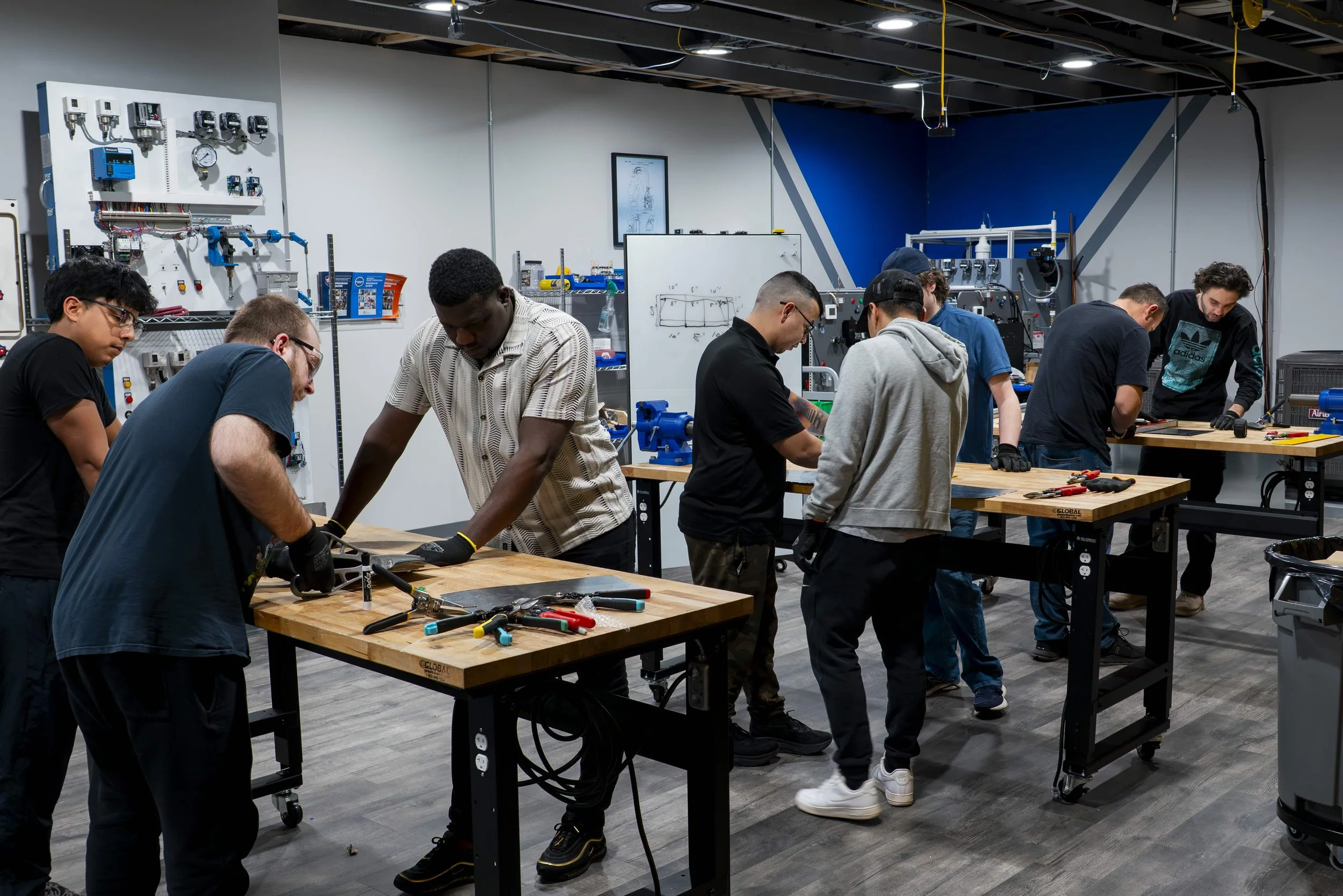
Our HVAC Technician Training Program delivers the most comprehensive hands-on HVAC training in New Jersey, designed to help students start a successful career in HVAC. This hybrid program blends classroom learning with hands-on technical training, giving you real-world experience working with the same equipment you’ll work on in the field. With our low 7-to-1 student to instructor ratio, we provide top-rated HVAC training to students throughout New Jersey
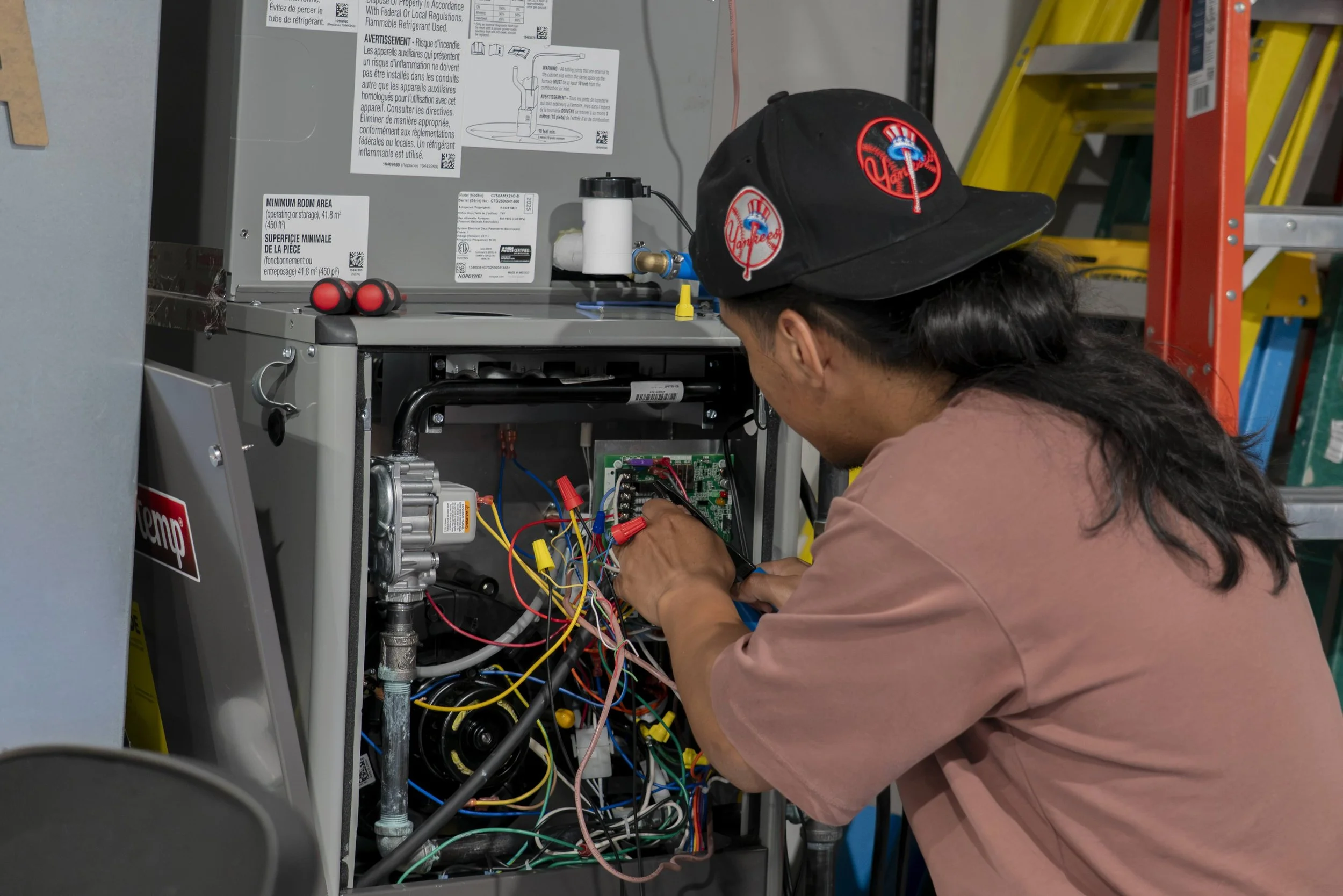
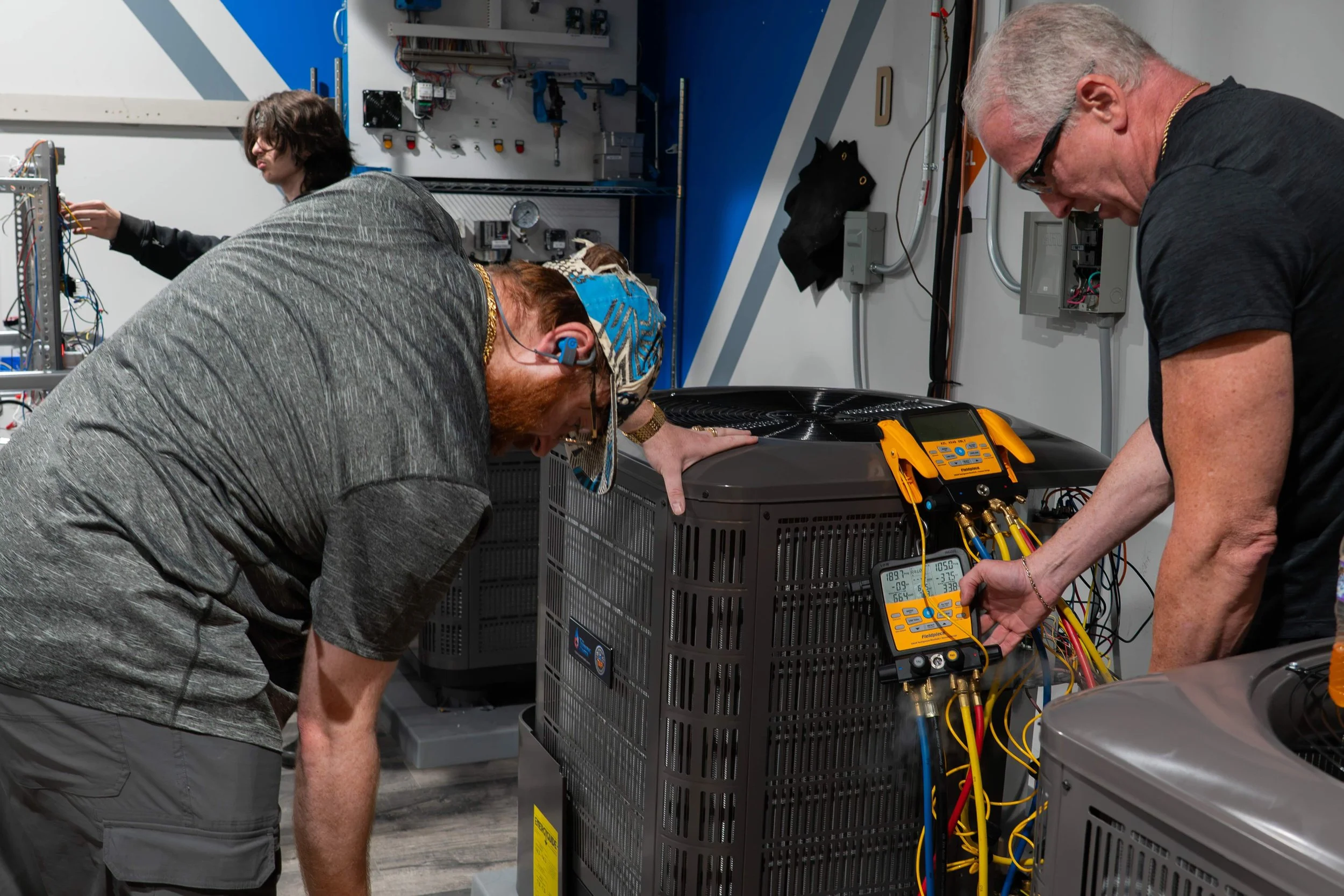
You will learn core HVAC skills and actively perform repairs and installations in settings that mirror job scenarios. The curriculum is extensive, covering heat pump technology, electrical circuitry, residential and commercial systems, EPA regulatory compliance, refrigerant cycle diagnostics, wiring schematics, and advanced troubleshooting.
This is a complete HVAC career program built to prepare you to graduate job-ready. You will graduate with a HVAC Training Certificate, EPA 608 Certification, A2L Refrigerant Certification, an OSHA-10 Safety Card, a full tool bag, and the NJ state-recognized training hours needed for long-term career advancement.
NJ Approved HVACR Education
The Training Center is an approved HVACR education provider in New Jersey. The training hours earned in this program count directly toward state requirements and serve as the official first step toward a professional HVAC career in NJ. This places graduates on the required path from education to an Apprentice role, which is needed to eventually become a Journeyman and Licensed Master HVACR Contractor. We are also approved by the EPA.

Program Schedule & Class Details
This 11-month HVAC training program consists of 82 classes, 40 of which are in-person at our Wrightstown, NJ campus. The program offers a flexible schedule and combines online learning with in-person hands-on training to help you gain the skills to start a career as an HVAC technician. The total cost is $15,000, with financing plans available starting as low as $190 per month. There are no hidden fees or added costs. Everything is covered in the tuition cost, including all tools, books, materials, certifications, and digital learning resources.
-
Program Details:
Program Length: 11 months
Schedule: 2 Classes Per Week (2 Hours Each)
Format: Hybrid (Online + In-Person Lab Training)
Total Training Hours: 192 hours
Student-to-Teacher Ratio: 7:1
Location: Wrightstown, NJ Campus
Tuition & What’s Included:
Total Tuition Cost: $15,000
This cost includes all tools, books, materials, resources, and certifications.
Every student receives a personal tool bag with high-quality professional HVAC tools, included in the tuition cost
Flexible financing plans are available. View payment plan options
Military: This program is approved for VA education benefits, including the GI Bill.
-
This program equips students with the industry recognized credentials needed to begin a successful career as an HVAC Technician. You will earn:
HVAC Training Certificate (with detailed transcript)
NJ State Board Approved Educational Hours
EPA 608 Universal Certification
A2L Refrigerant Certification
OSHA-10 Safety Card
-
Online Classes: Choose: 10 AM–12 PM or 6 PM–8 PM.
Lab Classes: Choose: 8–10 AM, 12–2 PM, or 6–8 PM.
Module 1: Professional Development 1
1.1 - October 27, 2026 - Online
1.2 - October 29, 2026 - Online
1.3 - November 3, 2026 - Online
1.4 - November 5, 2026 - Online
Module 2: Thermodynamics
2.1 - November 10, 2026 - Online
2.2 - November 12, 2026 - Online
2.3 - November 17, 2026 - Online
2.4 - November 19, 2026 - Online
Module 3: Basic Electricity
3.1 - December 1, 2026 - Online
3.2 - December 3, 2026 - Lab
3.3 - December 8, 2026 - Online
3.4 - December 10, 2026 - Lab
3.5 - December 15, 2026 - Online
3.6 - December 17, 2026 - Lab
3.7 - January 5, 2027 - Online
3.8 - January 7, 2027 - Lab
Module 4: Advanced Electric & Motors
4.1 - January 12, 2027 - Online
4.2 - January 14, 2027 - Lab
4.3 - January 19, 2027 - Online
4.4 - January 21, 2027 - Lab
4.5 - February 2, 2027 - Online
4.6 - February 4, 2027 - Lab
4.7 - February 9, 2027 - Online
4.8 - February 11, 2027 - Lab
4.9 - February 16, 2027 - Online
4.10 - February 18, 2027 - Lab
4.11 - February 23, 2027 - Online
4.12 - February 25, 2027 - Lab
4.13 - March 2, 2027 - Online
4.14 - March 4, 2027 - Lab
Module 5: Hydronic Boiler & Pump Systems
5.1 - March 9, 2027 - Online
5.2 - March 11, 2027 - Lab
5.3 - March 16, 2027 - Online
5.4 - March 18, 2027 - Lab
5.5 - March 23, 2027 - Online
5.6 - March 25, 2027 - Lab
5.7 - March 30, 2027 - Online
5.8 - April 1, 2027 - Lab
5.9 - April 6, 2027 - Online
5.10 - April 8, 2027 - Lab
Module 6: EPA Certification
6.1 - April 13, 2027 - Online
6.2 - April 20, 2027 - Online
6.3 - April 22, 2027 - Online
6.4 - April 27, 2027 - Online
6.5 - April 29, 2027 - Lab
Module 7: Refrigeration
7.1 - May 4, 2027 - Online
7.2 - May 6, 2027 - Lab
7.3 - May 25, 2027 - Online
7.4 - May 27, 2027 - Lab
7.5 - June 1, 2027 - Online
7.6 - June 3, 2027 - Lab
7.7 - June 8, 2027 - Online
7.8 - June 10, 2027 - Lab
Module 8: Refrigeration Practices
8.1 - June 15, 2027 - Online
8.2 - June 17, 2027 - Lab
8.3 - June 22, 2027 - Online
8.4 - June 24, 2027 - Lab
8.5 - June 29, 2027 - Online
8.6 - July 1, 2027 - Lab
8.7 - July 6, 2027 - Lab
8.8 - July 8, 2027 - Lab
8.9 - July 13, 2027 - Lab
8.10 - July 15, 2027 - Lab
Module 9: Air Source Heat Pumps
9.1 - July 20, 2027 - Online
9.2 - July 22, 2027 - Lab
9.3 - July 27, 2027 - Lab
9.4 - July 29, 2027 - Lab
Module 10: HVAC Troubleshooting
10.1 - August 3, 2027 - Lab
10.2 - August 5, 2027 - Lab
10.3 - August 10, 2027 - Lab
10.4 - August 12, 2027 - Lab
10.5 - August 17, 2027 - Lab
10.6 - August 19, 2027 - Lab
10.7 - August 24, 2027 - Lab
10.8 - August 26, 2027 - Lab
10.9 - August 31, 2027 - Lab
10.10 - September 2, 2027 - Lab
Module 11: Gas Combustion
11.1 - September 7, 2027 - Online
11.2 - September 9, 2027 - Lab
11.3 - September 14, 2027 - Online
11.4 - September 16, 2027 - Lab
11.5 - September 21, 2027 - Lab
11.6 - September 23, 2027 - Lab
Module 12: Professional Development 2
12.1 - September 28, 2027 - Online
12.2 - September 30, 2027 - Lab
-
Online Classes: Choose: 10 AM–12 PM or 6 PM–8 PM.
Lab Classes: Choose: 8–10 AM, 12–2 PM, or 6–8 PM.
Module 1: Professional Development 1
1.1 - June 22, 2026 - Online
1.2 - June 24, 2026 - Online
1.3 - July 6, 2026 - Online
1.4 - July 8, 2026 - Online
Module 2: Thermodynamics
2.1 - July 13, 2026 - Online
2.2 - July 15, 2026 - Online
2.3 - July 20, 2026 - Online
2.4 - July 22, 2026 - Online
Module 3: Basic Electricity
3.1 - July 27, 2026 - Online
3.2 - July 29, 2026 - Lab
3.3 - August 3, 2026 - Online
3.4 - August 5, 2026 - Lab
3.5 - August 10, 2026 - Online
3.6 - August 12, 2026 - Lab
3.7 - August 17, 2026 - Online
3.8 - August 19, 2026 - Lab
Module 4: Advanced Electric & Motors
4.1 - August 24, 2026 - Online
4.2 - August 26, 2026 - Lab
4.3 - August 31, 2026 - Online
4.4 - September 2, 2026 - Lab
4.5 - September 14, 2026 - Online
4.6 - September 16, 2026 - Lab
4.7 - September 21, 2026 - Online
4.8 - September 23, 2026 - Lab
4.9 - September 28, 2026 - Online
4.10 - September 30, 2026 - Lab
4.11 - October 5, 2026 - Online
4.12 - October 7, 2026 - Lab
4.13 - October 12, 2026 - Online
Module 5: Hydronic Boiler & Pump Systems
5.1 - October 19, 2026 - Online
5.2 - October 21, 2026 - Lab
5.3 - October 26, 2026 - Online
5.4 - October 28, 2026 - Lab
5.5 - November 3, 2026 - Online
5.6 - November 5, 2026 - Lab
5.7 - November 10, 2026 - Online
5.8 - November 12, 2026 - Lab
5.9 - November 17, 2026 - Online
5.10 - November 19, 2026 - Lab
Module 6: EPA Certification
6.1 - November 23, 2026 - Online
6.2 - December 1, 2026 - Lab
6.3 - December 3, 2026 - Online
6.4 - December 7, 2026 - Online
6.5 - December 9, 2026 - Lab
6.6 - December 14, 2026 - Lab
Module 7: Refrigeration
7.1 - December 16, 2026 - Online
7.2 - January 5, 2027 - Lab
7.3 - January 7, 2027 - Online
7.4 - January 11, 2027 - Lab
7.5 - January 13, 2027 - Online
7.6 - January 19, 2027 - Lab
7.7 - January 21, 2027 - Online
7.8 - January 26, 2027 - Lab
Module 8: Refrigeration Practices
8.1 - January 28, 2027 - Online
8.2 - February 2, 2027 - Lab
8.3 - February 4, 2027 - Online
8.4 - February 9, 2027 - Lab
8.5 - February 11, 2027 - Online
8.6 - February 16, 2027 - Lab
8.7 - February 18, 2027 - Lab
8.8 - February 23, 2027 - Lab
8.9 - February 25, 2027 - Lab
8.10 - March 2, 2027 - Lab
Module 9: Air Source Heat Pumps
9.1 - March 4, 2027 - Online
9.2 - March 9, 2027 - Lab
9.3 - March 11, 2027 - Lab
9.4 - March 16, 2027 - Lab
Module 10: HVAC Troubleshooting
10.1 - March 18, 2027 - Lab
10.2 - March 23, 2027 - Lab
10.3 - March 25, 2027 - Lab
10.4 - March 30, 2027 - Lab
10.5 - April 1, 2027 - Lab
10.6 - April 6, 2027 - Lab
10.7 - April 8, 2027 - Lab
10.8 - April 13, 2027 - Lab
10.9 - April 15, 2027 - Lab
10.10 - April 20, 2027 - Lab
Module 11: Gas Combustion
11.1 - April 22, 2027 - Online
11.2 - April 27, 2027 - Lab
11.3 - April 29, 2027 - Online
11.4 - May 4, 2027 - Lab
11.5 - May 6, 2027 - Lab
11.6 - May 11, 2027 - Lab
Module 12: Professional Development 2
12.1 - May 13, 2027 - Online
12.2 - May 19, 2027 - Lab
-
Our HVAC Training Program includes a total of 192 hours, divided between classroom and lab training. Below is the breakdown of hours:
Hybrid Classroom = 102 Hours
On-Site Lab = 90 Hours
Combined Total = 192 hours
-
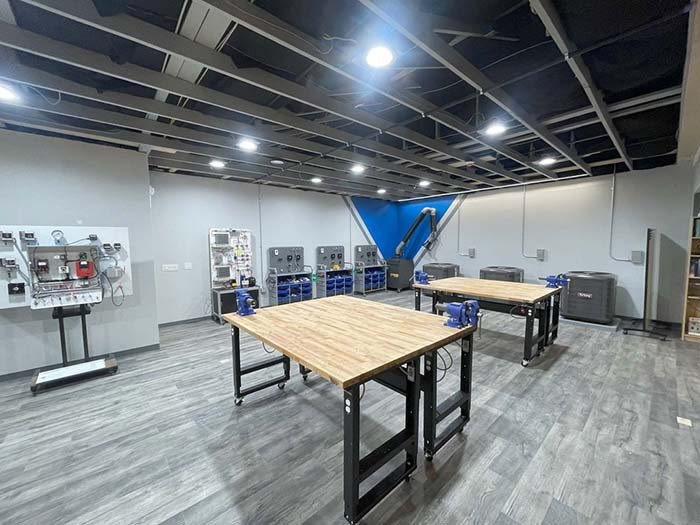
The Training Center provides HVAC training in New Jersey at our Wrightstown and Branchburg (coming soon) location. Both campuses feature professional-grade training labs, classrooms, and modern simulator boards engineered to mirror real-world environments.
Inside Our HVAC Training Lab:
Residential Heat Pump Stations: Complete heating and cooling setups equipped with auxiliary electric backup systems.
Gas Furnace & AC Configurations: Physical furnace units fully integrated with central air conditioning systems and hybrid fossil fuel kits.
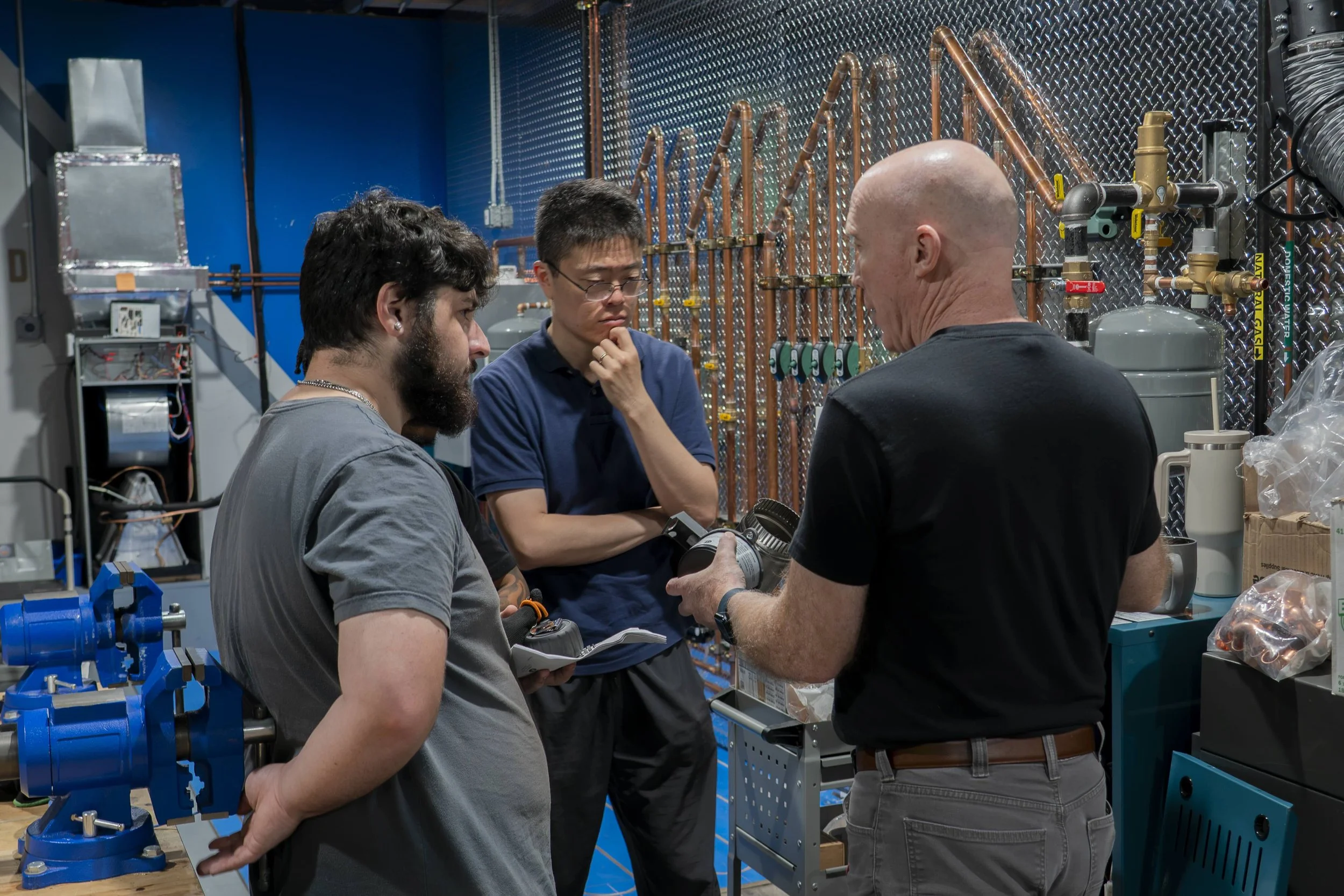
Hydronic Boiler Walls: High-efficiency Combi and standard boilers connected to custom hydronic walls featuring live circulation pumps, piping, and zone controls.
iConnect Diagnostic Trainers: Professional-grade TU-100 refrigeration trainers and TU-601 multi-head compressor systems featuring built-in, hardwired fault codes for advanced troubleshooting.
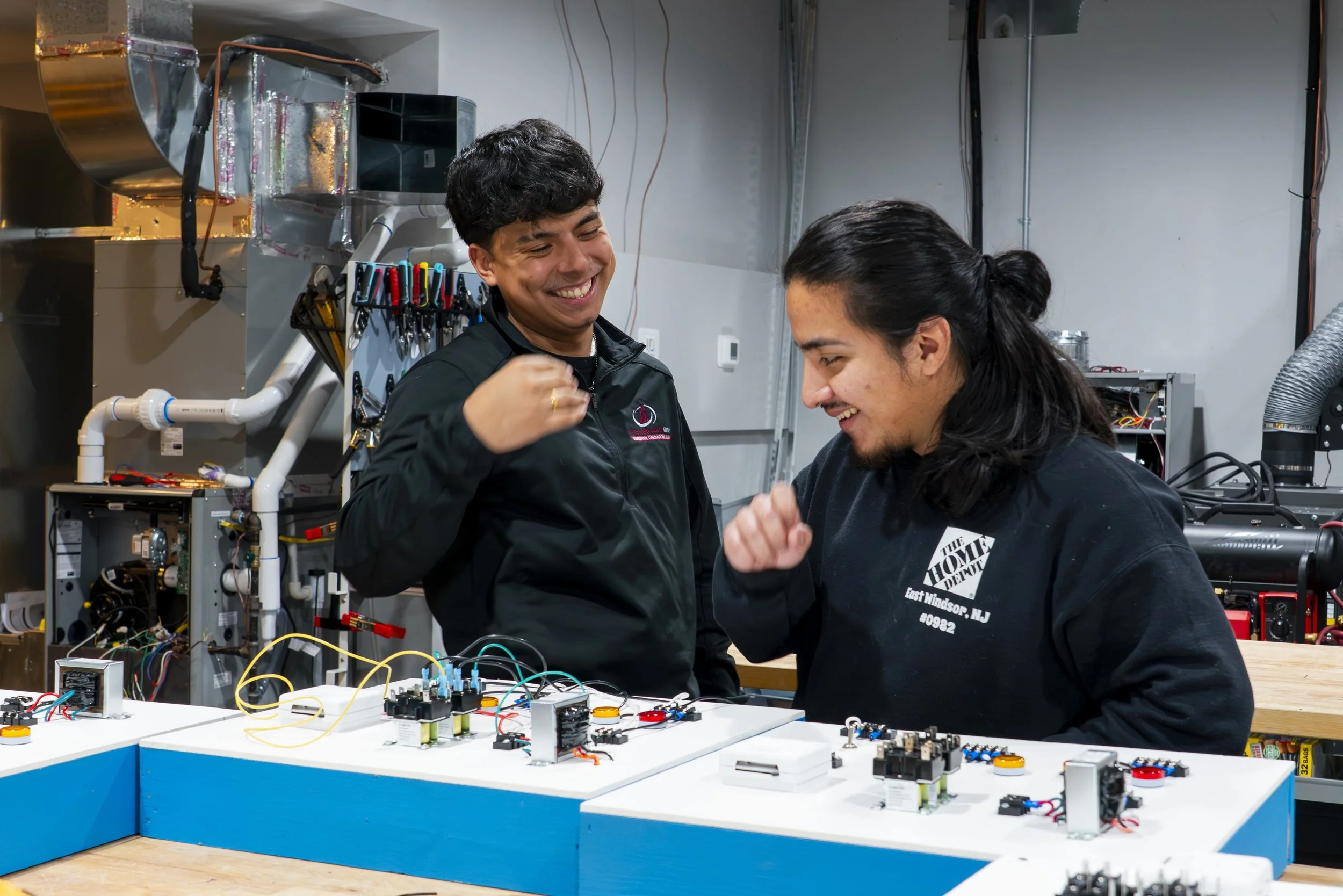
Custom Electrical Control Boards: Proprietary, in-house built electrical panels designed for hands-on wiring of relays, zone valves, and field controls.
Commercial Rack Refrigeration: Heavy-duty rack refrigeration trainers engineered for advanced piping, system wiring, and pressure diagnostics.
Contact us to schedule a visit; our instructors are always happy to show you around.
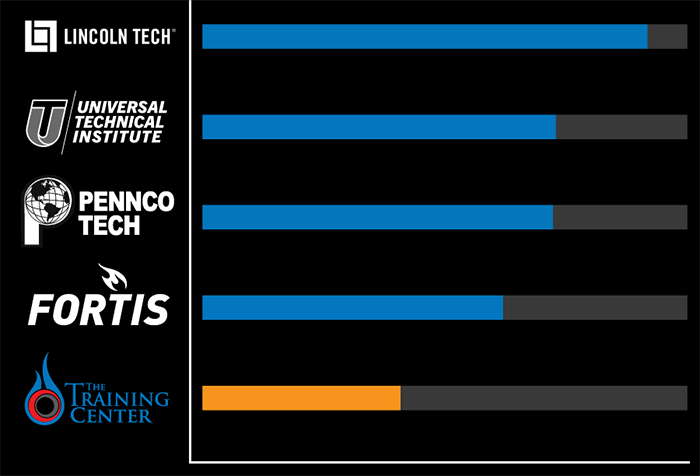
NJ HVAC Tuition Cost Comparisons
See how our tuition compares to other NJ trade schools
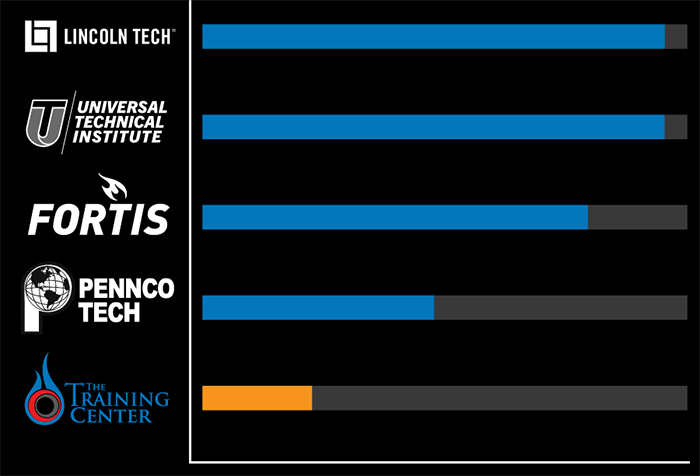
Average Student-to-Teacher Ratios
See how our small class sizes compare to other NJ trade schools
HVAC Training Program Benefits
-
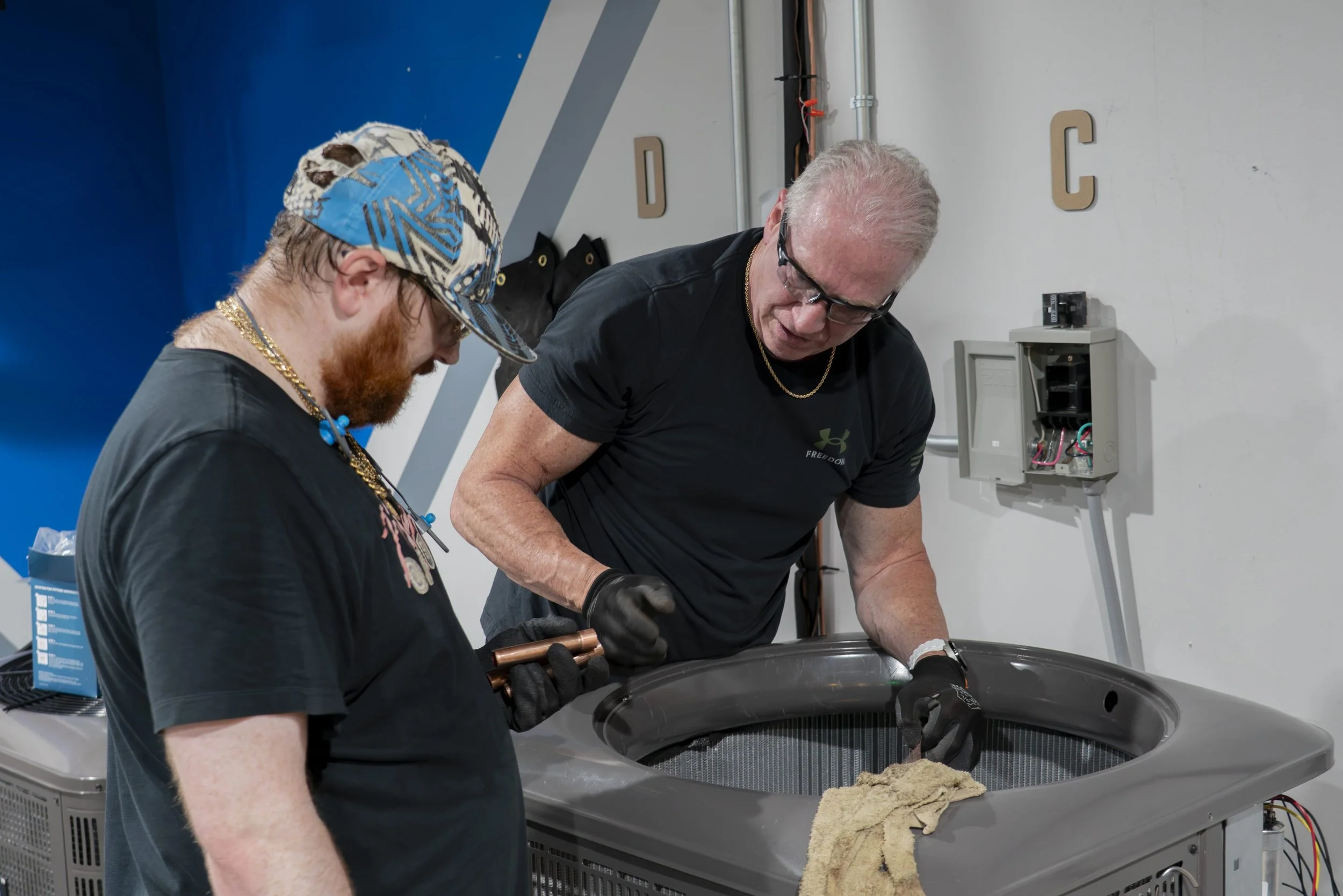
We don’t just teach the basics; our program covers the full scope of the HVAC trade. Our curriculum equips you with the technical skills required for residential and commercial heating, ventilation, air conditioning, and refrigeration (HVACR). You will build a strong foundation in thermodynamics, refrigeration cycles, gas combustion, and electrical circuitry. You will perform installations, advanced troubleshooting, and system repairs directly on fully operational mechanical equipment. This direct experience with live systems ensures you graduate ready to step straight onto the job site.
-
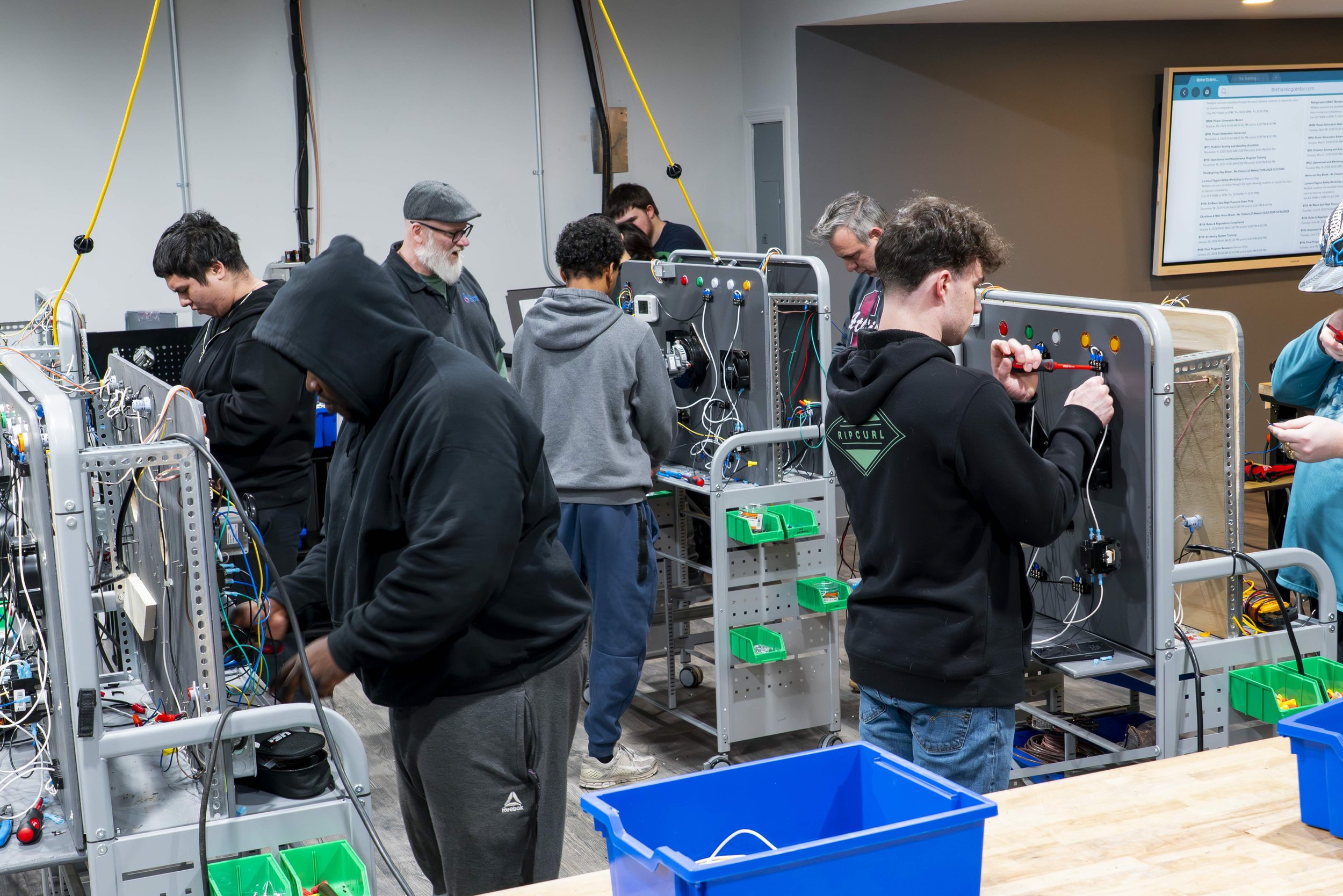
Our program provides more hands-on training and smaller class sizes than other trade schools. You gain comprehensive, hands-on experience working directly with the equipment and systems used by professional technicians. Our professional-grade HVAC labs simulate real-world conditions, giving you the confidence to overcome the challenges you will face on the job. With our low 7-to-1 student-to-teacher ratio, you receive individual support and focused coaching paced to fit your learning needs, ensuring you are fully prepared to succeed in the field.
-
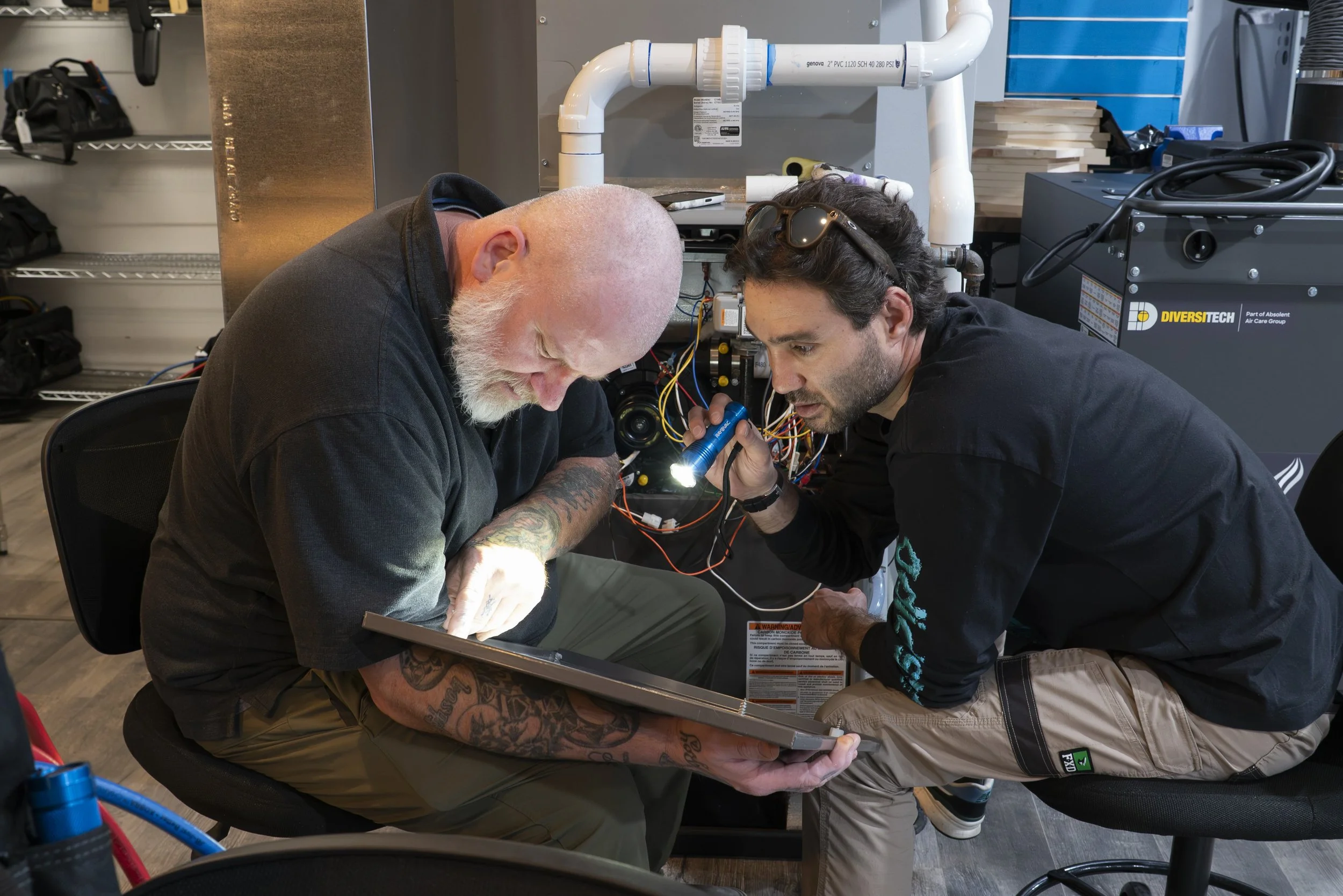
For many technicians, becoming a Licensed Master HVACR Contractor is the ultimate long-term career goal in New Jersey. The Training Center is an officially approved HVAC education provider by the New Jersey Department of Labor and Department of Education. To qualify for a license, the state requires a strict combination of field experience, On-the-Job Training (OJT), and Related Technical Instruction (RTI). The training hours earned in our program count toward your state-required RTI hours as mandated by the New Jersey State Board of Examiners of HVACR Contractors. Completing this program is an official first step toward a professional HVAC career and license in NJ.
-
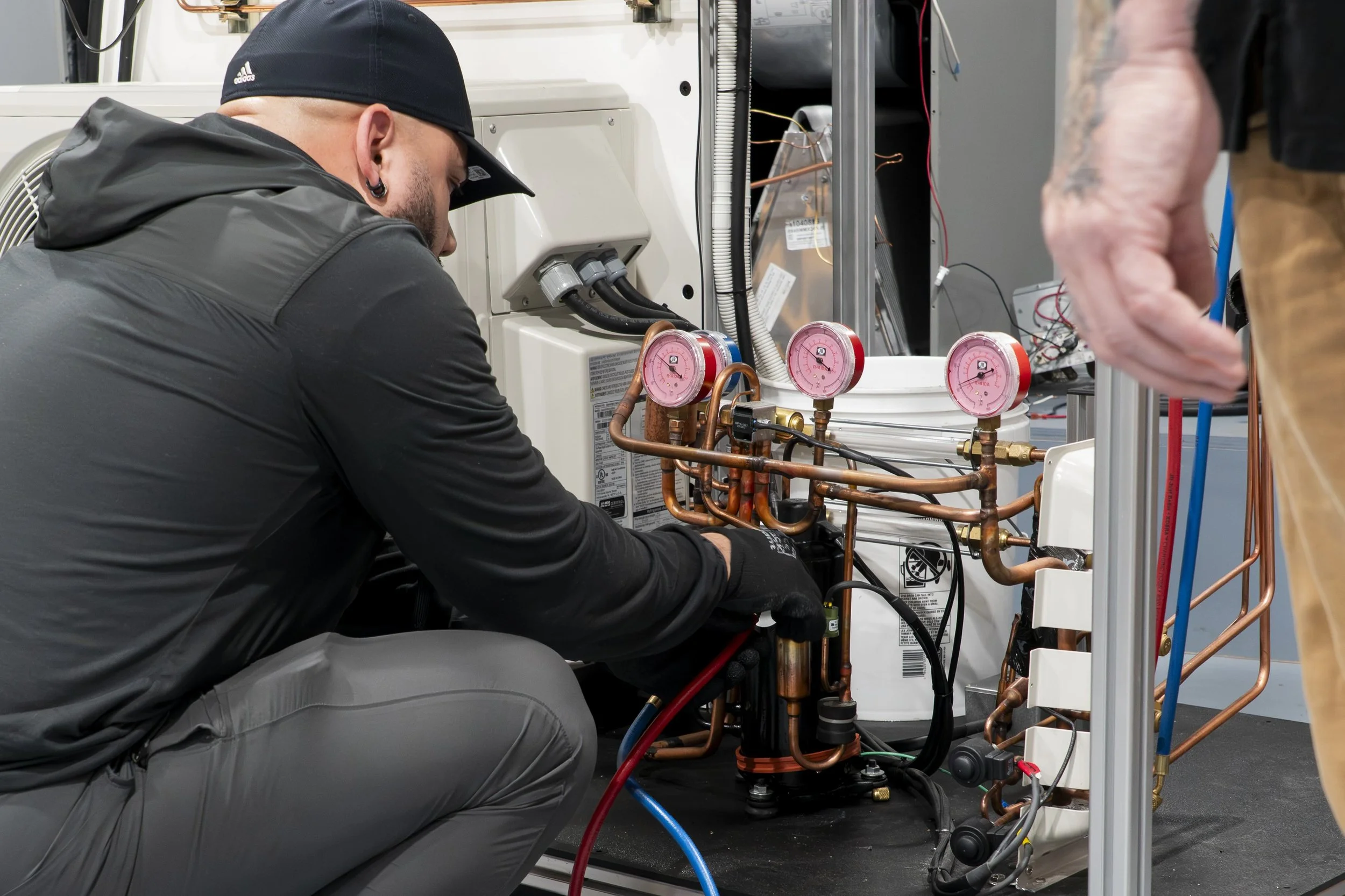
The HVAC industry continues to evolve with new technologies and refrigerants. Our curriculum is designed to adapt, ensuring you meet the exact needs of today’s job market. Our program prepares you to enter the workforce with the specific industry credentials employers require. Along with your official HVAC Training Certificate of Completion, you will earn an EPA 608 Certification, an A2L Refrigerant Certification, and an OSHA-10 Safety Card. This legally authorizes you to handle regulated refrigerants and safely service modern low-GWP systems. Graduating with these technical credentials gives you a competitive edge when applying for apprenticeships and field technician roles.
-
Our goal is to help every student build a successful HVAC career. A valuable benefit of our program is the job placement support and personalized career guidance provided to each student. This includes digital resume building, an online professional portfolio, interview preparation, expert mentorship, and direct networking opportunities with employers. We build strong relationships with hiring partners across New Jersey to create career opportunities for our graduates. This commitment helps position our students for long-term success.

Professional Tool Bag Included
Your HVAC Career Starts with the Right Tools
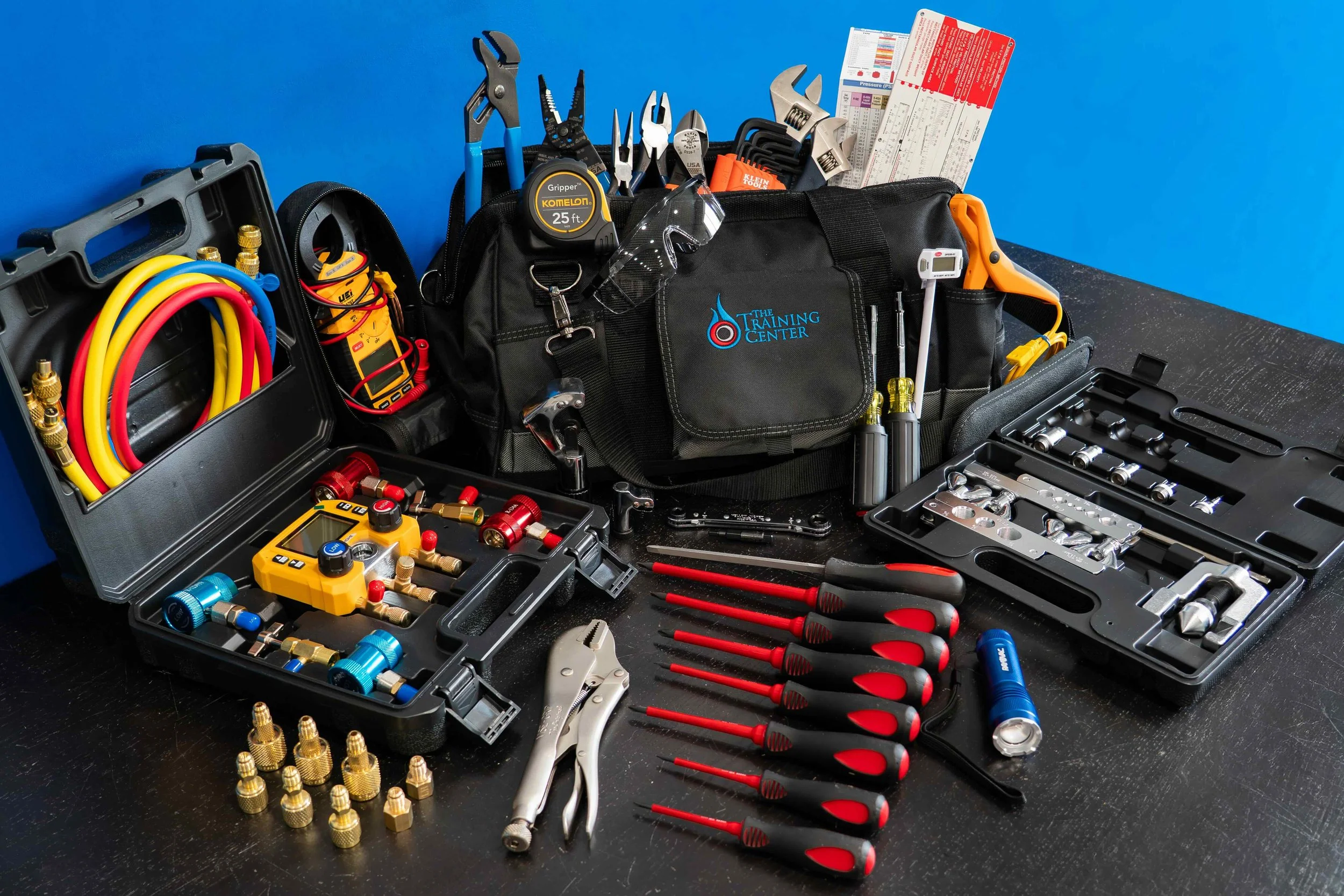
We care about you entering the trade fully prepared. That is why you receive a personal tool bag filled with high-quality gear built to last deep into your career. Included in the cost of tuition, and yours to keep at no additional cost, this kit features tools from brand-name manufacturers like Channellock and Klein Tools, along with insulated screwdrivers and a UEi multimeter with probe attachments. Your bag also includes Yellow Jacket refrigerant manifold gauges, tubing cutters, and a swaging and flaring kit. With this gear, your HVAC career starts with the exact tools you will rely on every day on the job.
HVAC Technician Training Curriculum
Our HVAC technician training program includes a comprehensive curriculum of 12 educational modules, helping students learn HVAC systems. The curriculum includes course topics across HVAC, heating, ventilation, air conditioning, and refrigeration.
-
We start by learning The Student Mentality (TSM) and encouraging students to create a mindset of being a lifelong learner. Effective communication is an important skill for any HVAC professional, and we will explore ways to improve with clients, co-workers, and more. Developing a proper work-life balance is one of the keys to a successful HVAC career.
-
Understand why things work, not just how by studying the science behind refrigeration systems. Starting with the Laws of Thermodynamics and Heat Theory, then the relationship between pressure and temperature. Sensible and Latent Heat, BTUs and boiling points. Discuss and consider the Kinetic Theory of Gases. What makes a material a good insulator, what are the best conductive materials, and what are the three ways that heat transfers?
-
We will start by learning the very basics of electricity: atoms, protons, neutrons, and electrons. Electrical safety and the basic electrical components and circuitry. Understand the flow of electricity, voltage, amperage, and resistance and how they impact each other, Ohm's Law and how it applies. We will discuss what makes electrical materials good conductors and good insulators, and how to choose what material to use, including sizes of wire and when to use what size.
-
Gain an in-depth understanding of the advanced diagnostic tools, electrical circuitry, and motors driving modern HVAC systems. Students take a deep dive into operating professional multimeters to troubleshoot complex series and parallel circuits. You will learn to identify, install, and test critical system controls, including relays, contactors, sequencers, and switches, while executing safe electrical connections using appropriate wire nuts and terminal blocks. The training then transitions into the physics of AC and DC electric motors, covering single-phase, split-capacity, and three-phase systems. Students will test motor capacitors, evaluate hermetically sealed motors, and physically dissect advanced ECM (Electronically Commutated Motors) and variable-speed systems to replace internal modules. Training concludes with hands-on diagnostics, focusing on motor controls and thermal protection under heavy structural loads.
-
Explore the complex physics of pressurized, closed-loop hydronic heating networks. Students learn the critical differences between open plumbing and pressurized thermal loops, evaluating both static and dynamic system pressures. Training covers the mechanics of fluid flow, calculating precise flow rates (GPM) for optimal BTU delivery without causing pipe erosion or velocity noise. You will learn to navigate head pressure and friction loss, accurately size expansion tanks for proper system thermal equilibrium, and troubleshoot micro-bubble air elimination at the system's hottest points. The module also covers how to read and plot pump curves for energy efficiency, and safely identify the system's "Point of No Pressure Change" to prevent pump cavitation.
-
Define refrigeration, journey through the refrigeration cycle and be able to describe it in detail, as well as what happens in the four processes to make it work effectively. Learn about residential split-systems and the components involved and commercial systems and what makes them different. Discuss the different variations of installation like conventional, high-velocity, and mini-split, know the pros and cons of all and how to choose which method might be best.
-
You will learn all that you need to know about refrigeration tubing: sizing, how to connect the ends, brazing and flaring soft copper. Learn how to perform refrigerant recovery and evacuation of a system. Hook up and use gauges. Charge a system with subcooling or superheat and use the correct formula to arrive at the proper charge, weigh the charge properly. Methods of troubleshooting include identifying leaks, high and low voltage, insufficient airflow, and motor burnout.
-
Discuss the history of refrigerants, the impact of those refrigerants on the environment, and the development of the EPA's regulatory involvement. Understand the conservation aspect of the EPA and how to comply by completing leak checks and repair timelines. Learn about HFO and A2L refrigerants and complete a safety course on flammable refrigerants. This module ends with you earning your EPA 608 Certification and also completing your HFO / A2L Certification, two important HVAC credentials in the industry.
-
Learn what a heat pump is and how it works. Discover the components involved, including the 4-Way Reversing Valve. Discuss back-up heating systems, with technology moving forward and creating more efficient systems we see electric heat as backup. Learn the difference between pump thermostats and conventional thermostats. Finally we will get hands-on with the complexity of heat pump wiring and the wiring of the electric backup emergency heat systems.
-
We go back to communicating and asking the right questions in order to have a troubleshooting mindset. Learn how to read pictorial and ladder wiring schematics and the unique icons and lines, and how to apply the diagram to the actual system. Discover methods of electrical troubleshooting, how to chase power, and check components. Troubleshoot mechanical issues such as a motor or a compressor, or a TX valve. The best way to learn HVAC troubleshooting is with our hands-on training.
-
Understand the critical relationship between fuel, air, and ignition in gas heating systems. This module covers the fundamentals of combustion, including both single and two-stage heating cycles. You will learn the standard sequence of operation for modern furnaces, how to test gas valves, and methods for inspecting heat exchangers. We focus heavily on safety protocols, including proper venting, carbon monoxide awareness, and systematic diagnosis to ensure safe, highly efficient heating operation.
-
We wrap up by conducting practice interviews, job scenarios, resume building, and the essential steps to securing your first job and starting an HVAC career. You will build the skills and confidence to make a strong first impression. Our focus is to help you find a job with an HVAC company to begin your apprenticeship
-
Our Difference
As a family-run school, we believe helping people succeed isn’t just what we do; it's who we are and the foundation of everything we do.
-

Student Success
More than just a trade school, we are a lifelong partner in our students’ career success, and we’re proud to share their success stories.
-
Student Reviews
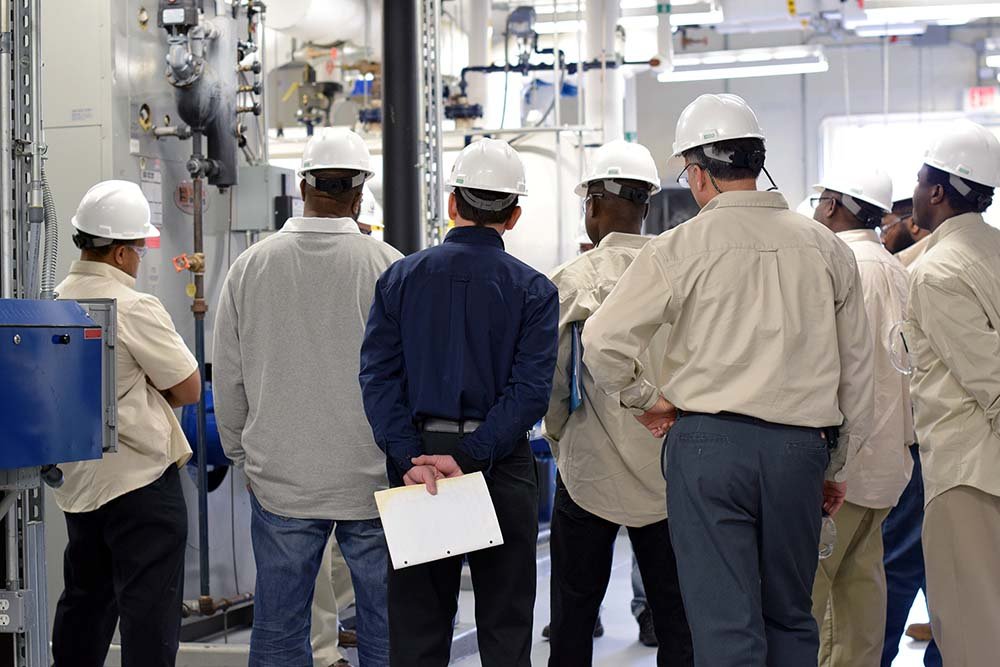
Our students are our highest priority and their success is everything. See what some of our students have to say about their experiences.
Top HVAC School in NJ
At The Training Center, we have over 40 years of experience helping students build successful careers as technicians. Our HVAC school in New Jersey offers classes designed for all experience levels, from beginners to professionals. Our programs specialize in training for certifications, state licensing, and career development. We also offer flexible schedules with day and night classes available. Our top-rated HVAC technician training serves students across the entire state of New Jersey, including:
Atlantic County, NJ
Bergen County, NJ
Burlington County, NJ
Camden County, NJ
Cape May County, NJ
Cumberland County, NJ
Essex County, NJ
Gloucester County, NJ
Hudson County, NJ
Hunterdon County, NJ
Passaic County, NJ
Salem County, NJ
Somerset County, NJ
Sussex County, NJ
Union County, NJ
Warren County, NJ
Mercer County, NJ
Middlesex County, NJ
Monmouth County, NJ
Morris County, NJ
Ocean County, NJ