The electrical systems that power our homes and commercial facilities operate with incredible efficiency, but they inherently carry severe risks. To safely harness this energy, engineers and electricians rely on strict physical safeguards. In the event of a fault, these safeguards prevent catastrophic electrocution and structural fires. In states like New Jersey, where municipalities enforce the NEC through rigorous inspections, learning the exact physics of fault currents and system equalization is a primary focus of a comprehensive Electrician Training Program in NJ, where students learn the strict codes that govern safe installations.
These foundational safeguards are known as grounding and bonding. Without them, any metal surface in a building could become lethally energized.
Yet, despite their widespread use and vital function, grounding and bonding are two of the most commonly misunderstood concepts in the trade. While they both work to keep buildings safe by re-routing rogue electricity, they serve entirely different physical functions. Mixing them up or failing to install them to code can result in immediate safety hazards. This article details the exact differences between grounding and bonding, their distinct roles in an electrical circuit, and the heavy mandates of National Electrical Code (NEC) Article 250.
Key Takeaways
Electrical Grounding: The physical connection between the electrical system and the earth, designed to dissipate static electricity and external high-voltage surges like lightning.
Electrical Bonding: The physical connection of non-current-carrying metal parts to create a continuous path back to the panel, ensuring circuit breakers trip during a fault.
Grounding Electrode Conductor (GEC): The wire that connects the main service panel to the ground rod in the earth.
Equipment Grounding Conductor (EGC): The internal wire (usually bare copper or green) that connects metal device boxes and equipment frames back to the service panel.
Main Bonding Jumper (MBJ): The single, vital connection point at the main service panel that connects the neutral system to the ground system.
Impedance: The total resistance to the flow of alternating current (AC), which dictates how efficiently a fault is cleared.
What is Electrical Grounding? (The Connection to Earth)
Grounding is the physical act of creating a direct wire connection from the main electrical service panel to the earth itself. The earth serves as a massive reservoir with zero electrical potential, meaning it can safely absorb and neutralize excess electrical energy.
The entire system that facilitates this is called the grounding electrode system. The most recognizable component of this system is the grounding electrode, which is typically a copper-coated steel rod driven eight feet deep into the soil outside a building. The wire that connects the main service panel to this rod is called the Grounding Electrode Conductor (GEC).
Another highly effective version of this system is the concrete-encased electrode, commonly known as a Ufer ground. Named after engineer Herbert G. Ufer, this method utilizes a length of conductive rebar embedded directly in the concrete foundation of a building. Concrete retains moisture and provides a massive surface area in contact with the earth, offering an exceptionally low-resistance path. Ufer grounding is standard in modern construction and is especially vital in areas with dry or rocky soil where traditional ground rods are ineffective.
The primary purpose of grounding is to manage environmental surges, not internal wiring faults. A lightning strike is the most common example. If lightning strikes a utility pole, it sends a massive high-voltage surge down the utility lines and into the home's service panel. Without a grounding system, that surge would instantly destroy appliances and potentially spark a fire. Thanks to the GEC, the excess voltage bypasses the home's internal wiring and is safely dispersed directly into the earth.
What is Electrical Bonding? (The Path to the Panel)
Put simply, "bonding" is the act of connecting metal parts together to establish electrical continuity and conductivity.
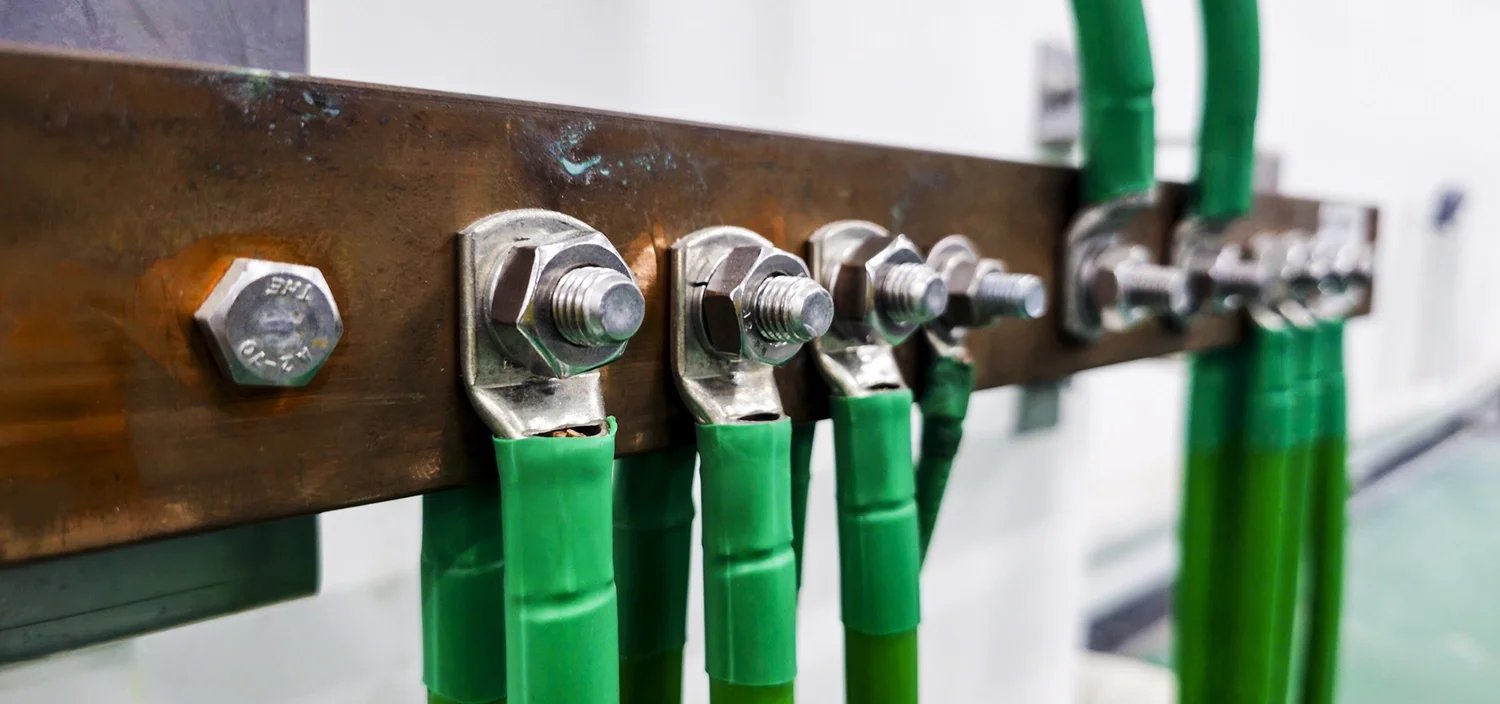
In a building, bonding ensures that all exposed metal parts (such as conduit, junction boxes, and appliance frames) are physically linked together to create a continuous, low-resistance path back to the electrical source.
The primary goal of bonding is to clear electrical faults. If a hot wire becomes loose and touches the inside of a metal junction box, that box instantly becomes energized. If the box is not bonded, the electricity sits there waiting for a person to touch it, creating a lethal shock hazard.
When the system is properly bonded, the rogue electricity uses the Equipment Grounding Conductor (EGC) to rush back to the panel. This massive influx of returning current causes a rapid spike in amperage, which instantly trips the overcurrent protective device (OCPD), or circuit breaker. By shutting off the power, bonding eliminates the shock hazard.
The Vital Link: The Main Bonding Jumper
To fully grasp how bonding clears a fault, one must understand how electricity flows. Alternating current flows from the utility transformer, through the service panel, out to the device (like a refrigerator motor), and then returns to the panel via the neutral conductor. From the panel, it travels back out to the utility transformer to complete the circuit.
When a fault occurs and energizes a metal frame, the EGC carries that rogue current back to the panel. However, to trip the breaker, that current must find its way back to the utility transformer.
This is where the Main Bonding Jumper (MBJ) comes in. The MBJ is a specific physical connection (often a green screw or a heavy copper strap) installed inside the main service panel. It bridges the ground bus bar and the neutral bus bar together. This jumper allows the fault current traveling on the ground wire to jump over to the neutral wire, providing it a complete path back to the transformer.
The NEC issues a strict mandate regarding this connection: the neutral and ground systems can only be bonded at the main service panel. If an electrician accidentally installs a bonding jumper in a downstream subpanel, it creates parallel paths for the neutral return current. This means everyday return current will constantly flow over the bare metal frames of the building's equipment, creating a severe and constant shock hazard.
Grounding vs. Bonding Compared
| Feature | Electrical Grounding | Electrical Bonding |
|---|---|---|
| Primary Function | Dissipates lightning and static voltage surges | Trips the circuit breaker during a fault |
| Final Destination | The earth (dirt) outside the building | The main service panel (and utility transformer) |
| Key NEC Components | Grounding Electrode Conductor (GEC),Ground Rods | Equipment Grounding Conductor (EGC),MBJ |
| Protects Against | Environmental electrical spikes | Internal short circuits and electrocution |
Deep Dive into NEC Article 250 Requirements
Article 250 of the National Electrical Code is the definitive rulebook for grounding and bonding. It is one of the most heavily scrutinized sections during municipal inspections.
A major focus of Article 250 is conductor sizing. The wires in these safety systems must be thick enough to handle massive surges of energy without burning up. To dictate these sizes, the NEC provides specific mathematical tables:
Table 250.66: This table dictates the required size of the Grounding Electrode Conductor (GEC) based on the size of the largest ungrounded service-entrance conductor.
Table 250.122: This table determines the minimum size for the Equipment Grounding Conductor (EGC) based on the amperage rating of the circuit breaker protecting that specific line.
Because the New Jersey Uniform Construction Code (UCC) mandates zero-tolerance compliance with these specific tables during residential and commercial upgrades, attaining proficiency in these calculations is a core requirement at a top-rated Electrician School in New Jersey.
Article 250 also mandates the bonding of completely separate household systems, such as interior metal water piping and structural gas piping. Metal pipes are highly conductive. If an exposed hot wire in a wall cavity makes contact with a copper water pipe, the entire plumbing system becomes energized. By officially bonding the water and gas pipes to the main electrical panel using specialized grounding clamps, any rogue voltage on the pipes will instantly trip the circuit breaker.
Dangerous Beginner Misconceptions
Understanding the invisible physics of electricity requires formal instruction. Relying on outdated myths can lead to highly dangerous circuit designs. There is one specific myth that must be debunked:
Myth: "Electricity takes the path of least resistance."
This phrase is fundamentally false. While it is widely repeated, it ignores the basic laws of physics.
Fact: Electricity takes ALL available paths back to its source.
Electricity will divide itself across every possible route inversely proportional to the impedance (the total resistance to alternating current) of each path. If there are two paths (one consisting of a thick copper wire and another consisting of a human body), the majority of the current will take the copper wire. However, a lethal fraction of that current will still travel through the human body.
Understanding that electricity does not choose just one path is vital for designing redundant bonding systems that prioritize human safety. Because calculating these specific impedance values is a technical skill that must be refreshed as codes and technologies evolve, working professionals frequently enroll in advanced Electrician classes & bootcampsto ensure their installations clear faults instantly and protect against lethal shock.
Starting a Career in the Electrical Trade
Choosing to start a career in the electrical trade means committing to the highest standards of safety and technical engineering. Grounding and bonding are the invisible shields that protect every building, and installing them requires a world-class foundation in electrical theory. The Training Center is an accredited Electrician School in New Jersey that teaches students with the exact skills required to safely manage and install these complex systems to code. Our programs teach you how to apply these complex NEC mandates directly on the job site, ensuring you can perform safe installations and confidently advance your career.