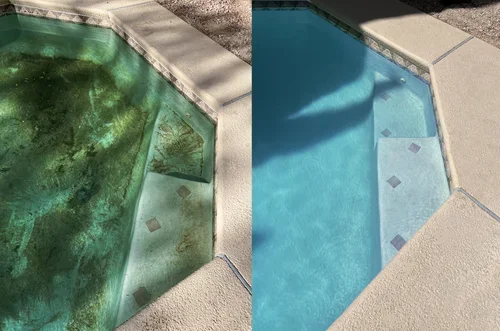
Pool water should be clear, clean, and inviting. When the color changes, it is not just cosmetic, it is diagnostic. Unusual pool water colors are early warning signs of chemical imbalance, contamination, filtration issues, or metal content in the water.
For aquatic professionals and facility operators, understanding these warning signs is foundational knowledge covered in a comprehensive CPO Certification Course, where water chemistry, sanitation, and regulatory compliance are core responsibilities.
Below is a guide to identifying what different pool water colors mean and how to correct them safely and effectively.
Key Takeaways
• Green water usually indicates active algae growth due to low sanitizer levels.
• Brown or tea-colored water is commonly caused by oxidized metals such as iron or copper.
• Cloudy or milky water signals high turbidity from poor filtration or chemical imbalance.
• Black stains or dark patches may result from metal precipitation, corrosion, or persistent algae.
• Slippery surfaces often indicate biofilm formation.
• Proper water balance, circulation, and sanitizer levels are critical for swimmer safety.
• Water clarity is a health department requirement and impacts regulatory compliance.
Understanding these warning signs allows operators to correct issues quickly and maintain safe, compliant pool water conditions.
What Does Pool Water Color Indicate?
Pool water color is a visible symptom of underlying chemistry or sanitation issues. Changes in color can quickly reveal whether sanitizer residual, pH balance, filtration performance, or metal content is outside acceptable ranges.
Water should be clear and properly balanced at all times. When discoloration appears, it signals that chemical equilibrium has shifted or contaminants are present. Ignoring early visual cues often allows minor imbalances to escalate into algae blooms, scaling, staining, or unsafe swimming conditions.
Identifying these indicators early helps prevent costly repairs, equipment damage, swimmer complaints, or potential facility closures.
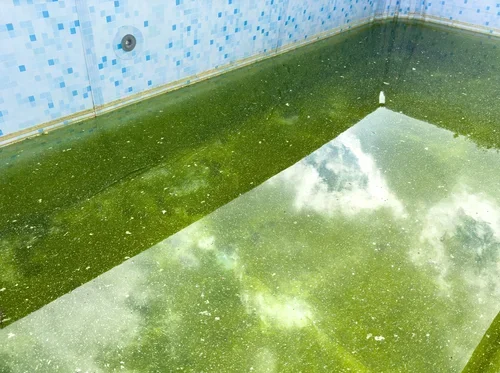
Green Pool Water: Algae Growth and Low Sanitizer Levels
Green pool water most commonly indicates algae growth. Algae thrive when sanitizer residual drops below effective levels or when circulation is insufficient.
Algae spores are constantly introduced into pools through wind, rain, and swimmer activity. When disinfectant levels are not maintained consistently, these spores multiply rapidly. Even a short lapse in chlorine control can trigger visible discoloration within days.
Common Causes
• Free chlorine below recommended range, typically 2.0 to 4.0 ppm for pools
• Poor circulation or dead spots
• High organic load
• Infrequent brushing
Algae can spread rapidly, cling to surfaces, weaken liners, and increase slip hazards.
How to Fix Green Pool Water
1. Test and confirm sanitizer residual.
2. Apply shock treatment according to manufacturer instructions.
3. Run filtration continuously for at least 24 hours.
4. Brush all pool surfaces thoroughly.
5. Re-test and rebalance water chemistry.
Maintaining proper sanitizer levels is one of the core competencies of professionals who hold a CPO Certification, as it directly impacts public health and safety.
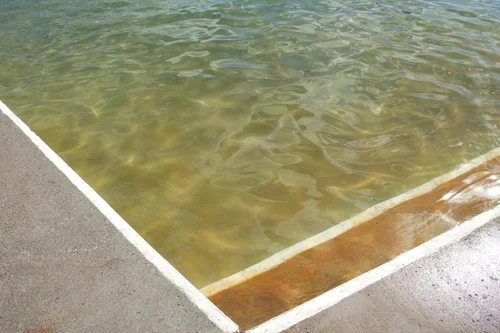
Brown or Rust-Colored Water: Metal Oxidation
Tea-colored or rusty pool water typically indicates oxidized metals such as iron or copper.
Metals may enter the pool from source water, aging plumbing, well systems, or certain chemical products. When oxidizers such as chlorine interact with dissolved metals, they cause those metals to fall out of solution and become visible.
Left untreated, metal staining can discolor surfaces, damage finishes, and create long-term cosmetic issues.
How to Correct Metal Staining
• Add a metal sequestrant, also known as a chelating agent.
• Avoid shocking the pool until metals are managed.
• Follow manufacturer dosing guidelines carefully.
• Maintain consistent circulation to allow filtration to remove suspended particles over time.
Metals are often introduced through source water, corrosion, or certain chemical additions.
Cloudy or Milky Pool Water: High Turbidity
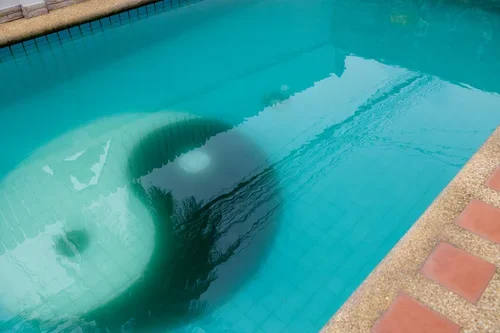
Cloudy water indicates suspended particles that reduce clarity. This condition is known as turbidity.
Turbidity occurs when fine debris, unfiltered contaminants, bacteria, or calcium precipitate remain suspended in the water. Even if sanitizer levels test within range, poor filtration or chemical imbalance can prevent water from appearing clear.
Cloudy water is one of the most common signs of maintenance breakdown and is frequently cited during health inspections.
Common Causes of Cloudy Water
• High pH levels above 7.8
• Elevated calcium hardness
• Poor filtration performance
• Inadequate sanitizer levels
• Heavy swimmer load
Ideal Water Balance Ranges
• pH: 7.2 to 7.6
• Calcium Hardness: 200 to 400 ppm for pools, 150 to 250 ppm for spas
When calcium hardness becomes too high, dilution is the only effective way to reduce levels. This requires partially draining the pool and refilling with fresh water.
Cloudy water is not just an aesthetic issue. Health departments require main drains to be clearly visible from the deck. High turbidity can lead to compliance violations or temporary closures.
Black Stains or Dark Patches: Precipitation or Corrosion
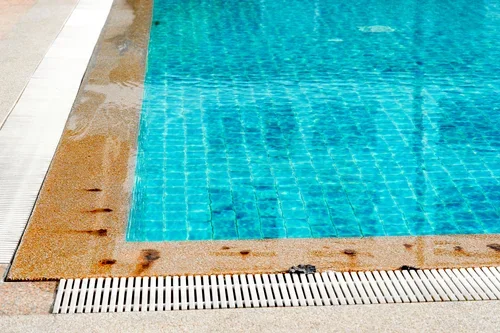
Dark stains or blackish discoloration may be caused by persistent algae, metal precipitation, galvanic corrosion, or organic debris breakdown.
Stains often develop gradually and may appear harmless at first. However, when left untreated, they can become embedded in plaster, vinyl, or tile surfaces. Chemical imbalance accelerates this process.
Identifying whether staining is organic or metallic is critical for choosing the correct treatment method.
How to Treat Surface Stains
• Physically scrub affected surfaces.
• Use pool-specific stain removal products.
• Rebalance water chemistry immediately.
• Inspect for corrosion sources if staining persists.
Water that remains out of balance accelerates staining and surface deterioration.
Slippery Surfaces: Biofilm Formation
If surfaces feel slick or slimy, biofilm may be forming. Biofilm is a protective layer created by bacteria and algae that makes surfaces resistant to sanitizers.
Biofilm develops when microorganisms attach to surfaces and produce a protective matrix. This layer shields bacteria from disinfectants and can make routine sanitation less effective.
Early intervention is important to prevent safety risks and bacterial growth.
How to Remove Biofilm
• Physically scrub all affected areas.
• Maintain proper sanitizer levels.
• Improve circulation.
• Monitor high-contact areas consistently.
Biofilm control is essential for preventing slip hazards and maintaining a safe aquatic environment.
Why Water Clarity Is a Public Safety Requirement
Water clarity is directly tied to swimmer safety and regulatory compliance. Imbalanced water can result in:
• Reduced sanitizer effectiveness
• Increased bacteria risk
• Slippery surfaces
• Decreased visibility of swimmers in distress
• Equipment damage
• Health department violations
Maintaining proper clarity and chemistry protects swimmers, staff, and facility operators.
Pool Operator Training and Ongoing Compliance
Understanding water color, turbidity, sanitation control, and metal management is foundational knowledge for a Certified Pool Operator responsible for maintaining safe and compliant aquatic facilities. These are not just visual concerns. Changes in clarity or color often signal deeper chemical imbalances, filtration inefficiencies, or contamination issues that require immediate attention.
Professional aquatic operations depend on consistent monitoring of sanitizer levels, pH balance, calcium hardness, and circulation performance. Operators must be able to recognize early warning signs, identify root causes, and apply corrective measures before minor issues develop into safety hazards or regulatory violations.
Through structured training such as a CPO Certification Course, operators learn how to:
• Maintain proper water chemistry and sanitation
• Handle pool chemicals safely
• Meet public health standards and regulations
• Manage filtration and circulation systems
• Prevent safety hazards and compliance violations
For professionals maintaining credentials, continuing education through CPO Renewal ensures knowledge remains aligned with evolving standards and best practices.
Investing in education strengthens facility safety, reduces liability risk, and supports long-term operational success.
Final Thoughts: Clear Water Reflects Proper Management
Pool water color changes are early warning signs. They are not random occurrences.
By identifying discoloration quickly and responding with proper chemical balance, filtration adjustments, and physical cleaning, operators maintain both safety and compliance.
Clear water is the result of consistent monitoring, disciplined maintenance, and informed decision-making. When operators understand the science behind water chemistry, they protect swimmers, preserve equipment, and elevate the standard of aquatic facility management.